Hip Labral Tears
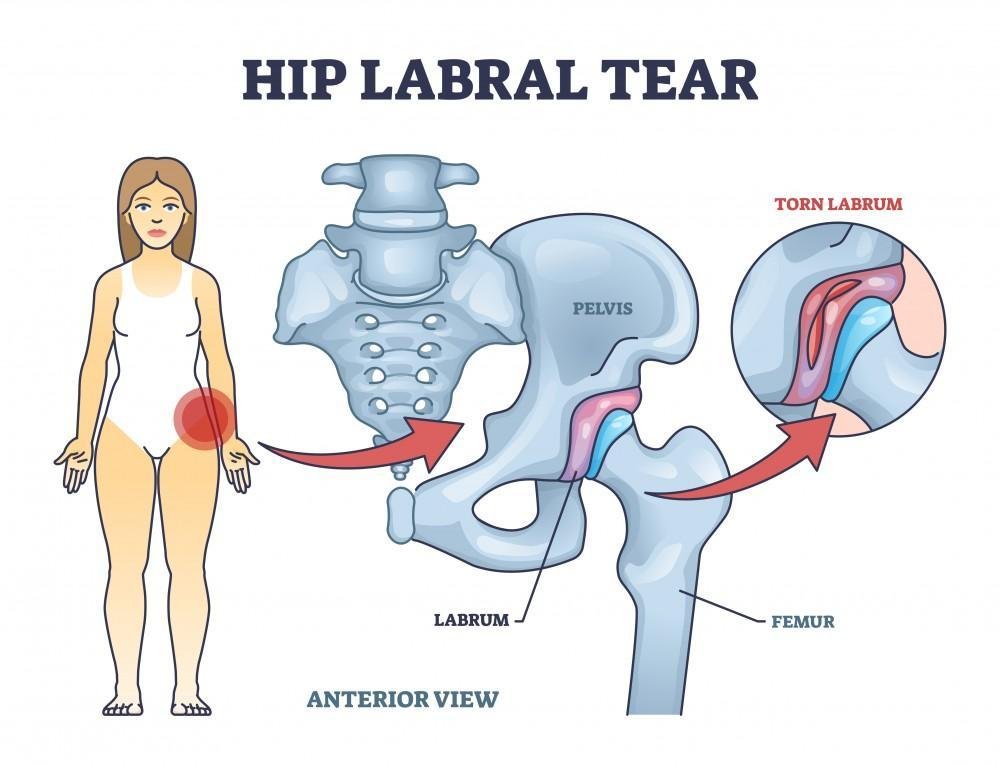
Severity: Moderate to Severe depending on tear size and underlying structural factors
Typical recovery time: Conservative management for small tears typically takes 6–12 weeks to produce meaningful symptom improvement. Surgical recovery after hip arthroscopy typically takes 4–6 months
Can I keep running? Running through significant pain is not advisable, but many runners with small labral tears manage symptoms with activity modification and physical therapy and continue training at a reduced level
What's Actually Happening: The acetabular labrum is a ring of fibrocartilage lining the rim of the hip socket, deepening the joint, sealing synovial fluid inside, and absorbing shock during movement. When this cartilage tears — most commonly from repetitive impingement, femoroacetabular impingement (FAI) where abnormal bone shapes cause the ball and socket to pinch, or from acute twisting trauma — it causes deep groin pain, mechanical symptoms, and joint instability. Long-distance running is listed among the physical activities associated with labral wear and eventual tear, particularly in runners with underlying structural hip issues like FAI or hip dysplasia. An important biological reality about this injury is that labral tears don't heal on their own since the labrum has poor blood supply. This doesn't automatically mean surgery, though: small, degenerative tears in lower-demand runners sometimes become asymptomatic with 6–12 weeks of skilled physical therapy and activity modification, while large or displaced tears rarely become manageable without surgical intervention. With modern arthroscopy and evidence-based rehabilitation, 85–95% of patients return to their previous level of sport.
How You Know It's This (Symptoms):
Deep pain in the groin or front of the hip, often described as a low dull ache inside the joint rather than on the surface
A locking, clicking, or catching sensation in the hip during movement, particularly when rotating or changing direction
Pain that worsens with prolonged sitting, standing, walking, or athletic activity
Stiffness and limited range of motion in the hip joint, particularly internal rotation
Many hip labral tears cause no symptoms at all and are found incidentally on imaging, which is worth knowing if imaging reveals one
What To Do Right Now:
Reduce or avoid the specific movements and activities that provoke symptoms, particularly deep hip flexion, pivoting, and high-impact running
Over-the-counter NSAIDs can help manage pain and inflammation in the short term
Seek medical evaluation rather than self-treating, since distinguishing a labral tear from other causes of hip and groin pain requires imaging, specifically MRI arthrogram, for accurate diagnosis
Don't train through locking, catching, or significant mechanical symptoms
When to See a Professional:
Any deep groin or hip pain with clicking, locking, or catching sensations warrants proper evaluation rather than self-management
Symptoms that worsen or don't improve within 6 weeks of activity modification and basic conservative care
An MRI arthrogram is the most accurate imaging tool for diagnosing labral tears and should be requested rather than relying on plain X-rays alone
Surgical consultation with a hip preservation specialist is appropriate when conservative treatment hasn't produced adequate improvement after 3 months
How to Treat It:
Physical therapy as first-line treatment: Rest, activity modification, and physical therapy are recommended as the initial approach for most labral tears. Therapy focuses on strengthening the hip muscles to better support the joint and teaching proper hip movement patterns during activity to reduce impingement forces on the labrum.
Hip and core strengthening: Rehabilitation targets glute strength, hip abductor strength, and core stability to reduce the abnormal forces on the hip joint during running. These muscles act as dynamic stabilizers of the hip and their weakness is a consistent contributor to labral stress.
Corticosteroid injections: A steroid injection into the hip joint can temporarily relieve pain and inflammation when conservative measures alone aren't providing sufficient relief, and may enable more effective engagement with physical therapy during the rehabilitation phase.
Arthroscopic surgery: For large tears, tears with associated FAI, or cases that have failed comprehensive conservative treatment, hip arthroscopy is the surgical standard. The surgeon can repair the tear by stitching it, reconstruct it using tissue from elsewhere, or remove damaged labral fragments. A five-year outcomes study found that hip arthroscopy for runners with labral tears and FAI was associated with significant improvements in patient-reported outcomes and a moderately high rate of return to running at midterm follow-up. Recovery after surgery typically takes 4–6 months before return to running.
Activity modification during conservative management: Avoiding deep hip flexion, sudden pivoting, and high-impact loading during the conservative phase protects the already damaged labrum from further stress while the surrounding muscles are being strengthened.
The Recovery Plan:
Week 1–6: Activity modification, anti-inflammatory management, and begin physical therapy focused on hip and core strengthening. Avoid movements that provoke clicking, catching, or significant pain. Swimming and cycling are appropriate cross-training options since they maintain fitness without the high-impact loading of running.
Week 6–12: Continue progressive strengthening and movement retraining. Many runners with small tears see meaningful symptom improvement within this window with consistent physical therapy. If symptoms haven't improved adequately, surgical consultation is the appropriate next step.
Post-surgery (if applicable): Recovery after hip arthroscopy is structured in phases with protected weight bearing initially, progressive strengthening through months 2–4, and a gradual return to running typically beginning around month 4–5 depending on surgical findings and healing response.
