Snapping Hip Syndrome
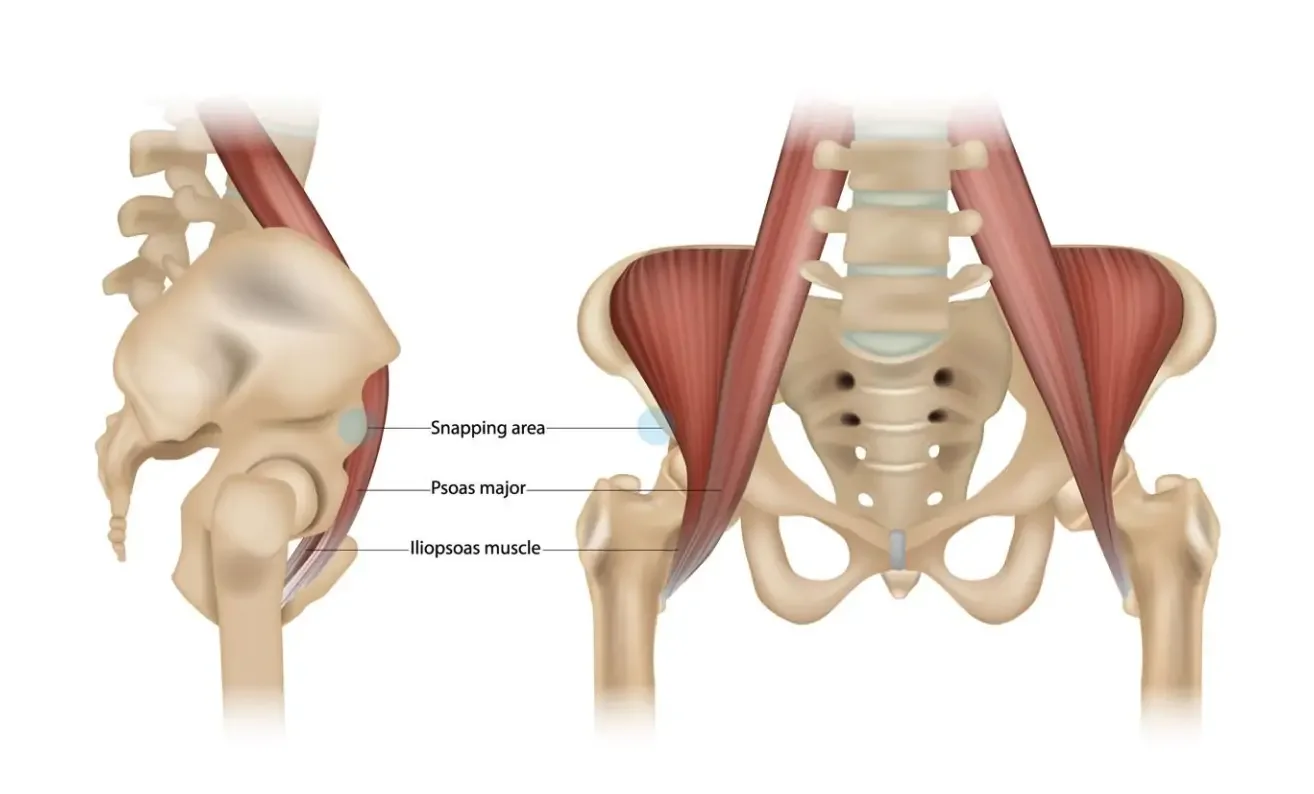
Severity: Mild in most cases
Typical recovery time: Most symptomatic cases resolve within 2–6 weeks with conservative treatment; cases requiring physiotherapy typically improve within 1–3 months
Can I keep running? Yes, if the snapping is painless, you can keep running without any restriction. If the snapping is painful, reduce mileage and avoid the movements that trigger it until symptoms settle
What's Actually Happening: Snapping hip syndrome, medically called coxa saltans, occurs when a tendon, muscle, or other soft tissue structure slides over a bony prominence of the hip and produces an audible or palpable snap. It's estimated that roughly 5–10% of the population has some degree of snapping hip, and it's particularly common in runners, ballet dancers, and gymnasts due to overuse and hypertrophy of the involved anatomy. There are two main types: external snapping, where the iliotibial band or gluteus maximus snaps over the greater trochanter on the outer hip, and internal snapping, where the iliopsoas tendon snaps over the iliopectineal eminence at the front of the hip. External snapping tends to be palpable and visible, while internal snapping is typically audible. A third, less common type involves intra-articular causes including labral tears or loose bodies within the joint, which is worth distinguishing since these require different management. Runners and active adolescents are among the most affected populations, making this one of the more relevant pages on this site for your audience specifically.
How You Know It's This (Symptoms):
An audible snap, click, or pop in the hip during specific movements, most commonly when flexing and extending the hip during running, getting up from a chair, or climbing stairs
The snapping may be visible or felt on the outer hip in the external type
Painless snapping is extremely common and by itself requires no treatment
When symptoms are present, they include pain or discomfort at the site of snapping, tightness in the hip flexors or outer hip, and occasionally weakness in the hip during activity
Intra-articular causes produce a deeper, less predictable snap often accompanied by clicking and mechanical catching deep in the joint rather than on the surface
What To Do Right Now:
If the snapping is completely painless, no action is required at all. This is one of those situations where no treatment is the correct treatment
If pain is present, reduce or avoid the specific activities that trigger the snap, particularly high knee lifting, running, and deep hip flexion
Ice the affected area for 15–20 minutes after activity if there is local pain or irritation
NSAIDs can help manage pain and inflammation in the early symptomatic phase
When to See a Professional:
Snapping accompanied by a deep catching or locking sensation inside the joint rather than on the surface, since this pattern suggests an intra-articular cause like a labral tear that requires imaging to assess
Pain that doesn't improve after 2–3 weeks of activity modification and basic conservative care
Any significant hip weakness or instability alongside the snapping
Surgical consultation is only appropriate after conservative treatment has genuinely failed, which is uncommon. The majority of snapping hip cases are managed non-operatively
How to Treat It:
Activity modification: Reducing or avoiding the movements that trigger the snap is the first and most effective step. For external snapping this often means reducing activities that repeatedly cross the leg over the midline, and for internal snapping it means reducing repeated hip flexion movements like hill running and high knee drills.
Stretching: Targeted stretching of the tight structure causing the snapping is a core part of conservative management. For external snapping, IT band and hip flexor stretching is appropriate. For internal snapping, iliopsoas stretching is the primary focus. The figure-four stretch and kneeling hip flexor lunge are both practical options for runners.
Strengthening: Hip abductor and hip flexor strengthening addresses the underlying muscle imbalances that contribute to abnormal tendon mechanics. Clamshells, sidelying hip abduction, and glute bridges are appropriate early exercises that don't aggravate the snapping.
Manual therapy and trigger point release: Physical therapists use trigger point release and soft tissue mobilization to address abnormally tight muscles and improve tissue quality around the hip. This is particularly effective for internal snapping hip where the iliopsoas is involved. In one documented case study, a marathon runner with internal snapping hip syndrome achieved complete resolution of both pain and snapping within 3 weeks through myofascial release to the psoas alongside proprioceptive neuromuscular facilitation exercises.
Corticosteroid injections: For cases where pain hasn't responded to physiotherapy alone, a corticosteroid injection into the iliopsoas bursa or the IT band region can provide meaningful symptom relief and facilitate more effective engagement with exercise therapy.
Surgery: Surgical intervention is the last resort and should only be considered once conservative treatment has genuinely failed. Most cases resolve with conservative management. When surgery is pursued, endoscopic release of the involved tendon has shown better outcomes than open procedures, and most cases of symptomatic snapping hip become asymptomatic following intervention.
The Recovery Plan:
Week 1–2: Modify activity to avoid triggering movements, ice as needed, and begin targeted stretching of the tight structure involved. NSAIDs for pain management if appropriate. Painless cases need no treatment plan at all.
Week 2–8: Progress to hip strengthening exercises alongside continued stretching. Physical therapy focused on trigger point release and movement retraining typically produces meaningful improvement within this window for most symptomatic cases.
Beyond 8 weeks: Most symptomatic cases resolve within 6–12 months of conservative management. Return to full running is guided by symptoms rather than a fixed timeline. The Run Doctor's return-to-running criteria are a useful practical guide: you should be able to bend and straighten the hip without pain, jog in a straight line without limping, and eventually sprint and perform cutting movements without difficulty before returning to full training.
