Popliteal Artery Entrapment Syndrome (PAES)
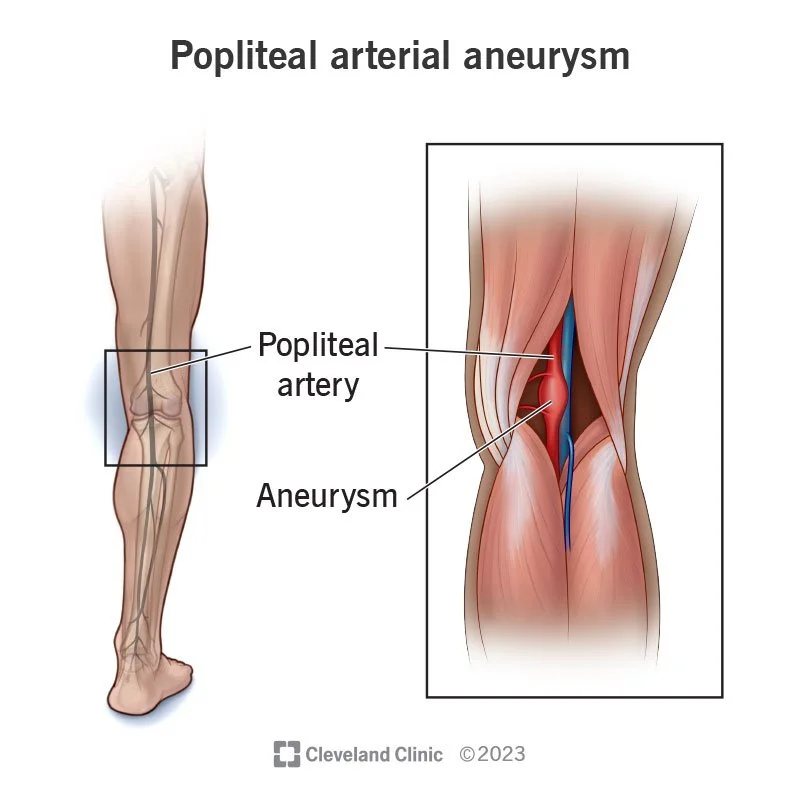
Severity: Severe if untreated
Typical recovery time: Most patients make a full recovery within 4 weeks of surgery, with return to competitive sport achieved in 78% of athletes at follow-up
Can I keep running? No. Continued compression of the popliteal artery risks progressive arterial damage.
What's Actually Happening: The popliteal artery is the main blood vessel running through the back of the knee, supplying blood to the lower leg and foot during exercise. In popliteal artery entrapment syndrome, surrounding muscles and tendons, most commonly the medial head of the gastrocnemius muscle, abnormally compress this artery during exercise, restricting blood flow to the lower leg. PAES is classified into six types based on the specific anatomical relationship between the artery and the compressing structure. It occurs most often in young athletic runners between the ages of 15 and 25, and track and field or running accounts for 47% of cases in surgical series, making this one of the most runner-relevant rare conditions on this site. Less than 1% of the population has PAES, but it is considered the leading cause of intermittent claudication in young patients without atherosclerotic vascular disease. It is frequently misdiagnosed as chronic exertional compartment syndrome since the symptoms are very similar, though the underlying mechanism is entirely different. Left untreated, PAES can cause lasting nerve and arterial damage, and in severe cases arterial occlusion requiring bypass surgery.
How You Know It's This (Symptoms):
Cramping, pain, or a tight aching sensation in the calf during running that appears after a predictable distance and eases within minutes of stopping, similar to CECS
Numbness, tingling, or pallor in the foot during exercise in more significant cases
Symptoms that occur after a shorter distance and take longer to fully resolve as the condition progresses
Absent or reduced pulses in the foot during or immediately after provoking exercise in structural cases, which a clinician can assess
Bilateral symptoms occur in 75% of cases, meaning both legs are often affected even if one side is worse
What To Do Right Now:
Stop running and avoid the exercise that provokes symptoms
See a sports medicine physician or vascular specialist as soon as possible. This is not a condition that can be self-managed or treated conservatively at home
Be specific about your symptoms when seeking evaluation, since the exercise-induced nature and young athlete context are important clues. Many physicians do not expect vascular disease in young patients, which is one of the main reasons diagnosis is delayed
Do not accept a diagnosis of chronic exertional compartment syndrome without ruling out PAES, since the two conditions are commonly confused and require entirely different treatment
When to See a Professional:
Any calf cramping or leg claudication in a young runner that is provoked by exercise and relieved by rest warrants vascular evaluation, not just musculoskeletal assessment
Diagnosis requires specialist imaging. MRI, MRA, or CT angiography with contrast, along with ultrasound-based non-invasive vascular testing, are used to confirm compression of the popliteal artery
How to Treat It:
Surgery is the definitive treatment: Unlike most conditions on this site, conservative management has no meaningful role in true PAES. The compressing structure must be surgically released to restore normal arterial flow. The standard surgical approach involves release of the popliteal artery and resection of the compressing portion of the gastrocnemius muscle.
Surgical outcomes: PAES surgery successfully relieves symptoms in over 90% of people according to UPMC data. A 20-year single-center experience of standardized surgical treatment found symptom improvement in 86.5% of cases and 82.4% able to return to sport at their previous level. A separate surgical series found 78% of athletes demonstrated full return to prior competitive levels at midterm follow-up, and all patients were able to resume athletic participation at least at a recreational level.
Post-surgical rehabilitation: Most people spend only 1–2 days in hospital after surgery. Postoperative rehabilitation is based on a progressive protocol similar to gastrocnemius muscle rehabilitation, restoring calf strength and function before return to running. A documented case of bilateral PAES in a young boxer showed full symptom remission and return to sport following surgery with appropriate postoperative rehabilitation.
The Recovery Plan:
Week 1–2 post-surgery: Hospital discharge typically occurs within 1–2 days. Rest, wound care, and gentle lower extremity movement to prevent stiffness. Most patients are walking normally within this window.
Week 2–6: Progressive rehabilitation restoring calf strength and ankle mobility. Non-impact cross-training such as swimming can usually begin during this phase.
Week 6 onward: Graduated return to running once surgical healing is confirmed and calf strength is restored. Most patients make a full recovery within 4 weeks of surgery, with competitive return to sport achieved in the majority of athletes by midterm follow-up.
