Nerve Entrapment Syndromes
Severity: Mild to severe, depending on which nerve is involved and how long symptoms have been present
Typical recovery time: Conservative management resolves many cases within weeks to months. Surgical decompression, when needed, typically produces recovery within weeks to a few months post-procedure
Can I keep running? Depends on severity. Mild cases with manageable symptoms may allow continued running with modification. Cases involving significant weakness, foot drop, or progressive numbness should stop immediately
What's Actually Happening: Nerve entrapment represents an uncommon but important cause of lower limb pain among runners, and any peripheral nerve in the lower extremity can potentially be affected. Entrapment occurs when a nerve is compressed, stretched, or irritated at a specific anatomical point, disrupting its ability to conduct normal signals. The result is pain, burning, tingling, numbness, or weakness in the area the nerve supplies. Lower limb entrapment neuropathies are frequently misdiagnosed and overlooked as a category, with delayed treatment resulting in persistent pain and in severe cases permanent nerve damage or muscle wasting. The most common presentations in runners involve the common peroneal nerve, the superficial peroneal nerve, the sural nerve, the saphenous nerve, and the deep peroneal nerve. Tarsal tunnel syndrome, which involves the posterior tibial nerve, is covered in detail in its own page in the Foot & Ankle section.
The key point about this category is that nerve pain has a distinctly different quality from muscle or tendon pain. Burning, electric, shooting, or tingling sensations in a specific distribution that don't match the pattern of any obvious structural injury are the hallmark signals to think about nerve entrapment rather than a more typical overuse injury.
How You Know It's This (Symptoms):
Common peroneal nerve (outer knee and shin):
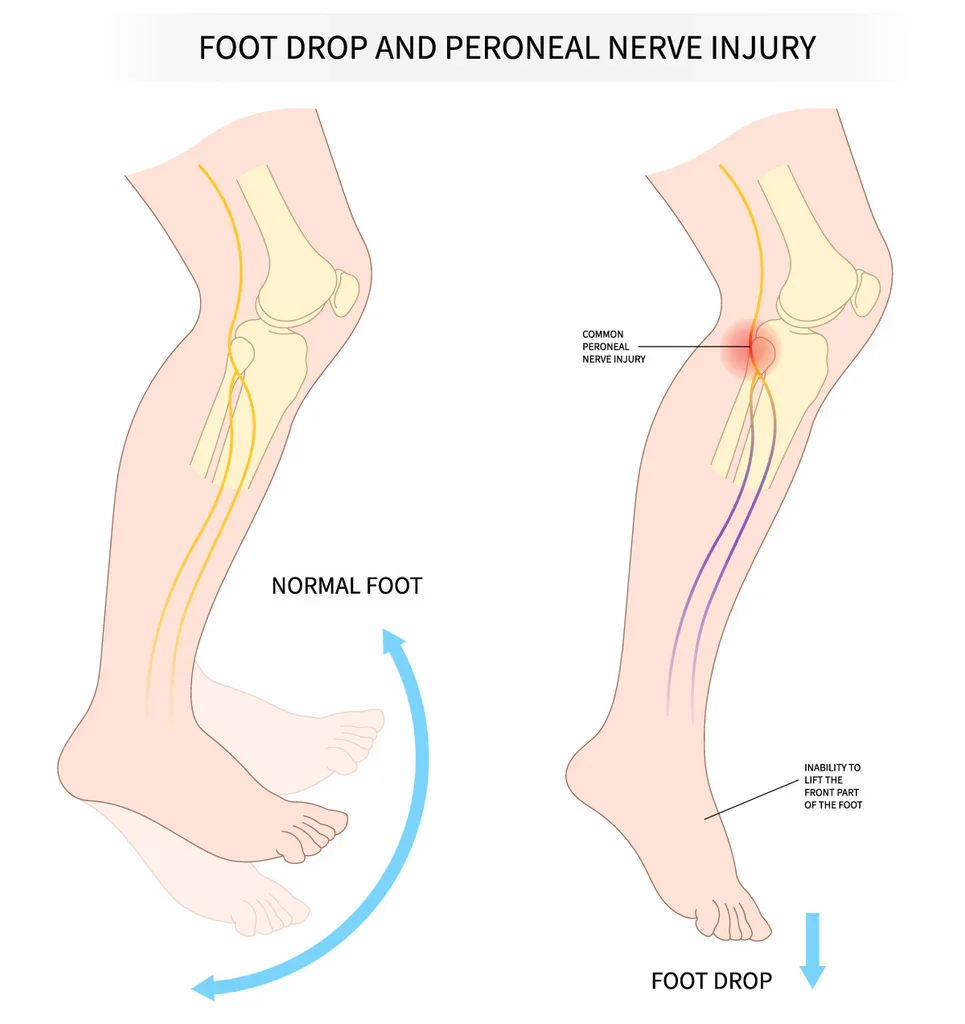
Foot drop, difficulty lifting the front of the foot during walking or running
Numbness or tingling along the outer lower leg and top of the foot
The most common entrapment neuropathy of the lower extremity, occurring at the fibular head just below the outer knee
Superficial peroneal nerve (outer shin and dorsum of foot):
Burning or aching pain along the outer lower leg and top of the foot
Symptoms that worsen with running and eversion of the foot
Often associated with ankle sprains that stretch the nerve
Deep peroneal nerve (top of foot and first toe webspace):
Pain, numbness, or tingling on the top of the foot and between the first and second toes
Worsened by tight lacing of running shoes directly over the nerve
Particularly relevant to runners since shoe compression is a direct contributing cause
Sural nerve (outer ankle and lateral foot):
Pain, burning, or numbness along the outer ankle and lateral foot
Can be associated with ankle sprains, tight calf muscles, or compression from footwear
Saphenous nerve (inner knee and inner lower leg):
Pain or numbness along the inner knee and medial lower leg without weakness
Prolonged walking and standing worsen symptoms, and rest alleviates them
Many patients also report night pain improved by massage or walking
What To Do Right Now:
Stop or significantly reduce running if symptoms are progressive, involve weakness, or are worsening
For shoe-related nerve compression of the deep peroneal nerve, loosen laces immediately and check that the shoe isn't pressing over the affected area
Avoid positions that directly compress the affected nerve — for common peroneal entrapment at the fibular head, avoid crossing the legs or prolonged kneeling
Seek medical evaluation rather than self-treating, since distinguishing which nerve is involved and where the entrapment is located requires a thorough clinical examination and often electrodiagnostic testing
When to See a Professional:
Any foot drop, significant weakness, or rapidly progressive numbness requires urgent evaluation since these suggest more serious nerve involvement
Burning, tingling, or electric pain in a specific distribution that doesn't respond to standard musculoskeletal treatment within 2–3 weeks warrants nerve-specific assessment
Diagnosis requires a meticulous physical examination including postexercise assessment when necessary, along with nerve conduction studies and imaging in many cases. A high index of suspicion for neurologic syndromes is essential since these conditions are frequently missed
Surgical decompression should be considered judiciously in resistant cases based on severity and progression of symptoms — early identification and treatment significantly improves outcomes
How to Treat It:
Address the mechanical cause first: Many nerve entrapments in runners have a direct mechanical cause that can be addressed without surgery. Tight shoelaces causing deep peroneal nerve compression, ankle sprains repeatedly stretching the superficial peroneal nerve, or poor foot biomechanics compressing the sural nerve are all examples where correcting the root cause produces meaningful improvement.
Activity modification: Reducing the specific activities that provoke nerve symptoms is the first conservative step. Avoiding positions that compress the nerve during daily activity is equally important alongside managing training load.
Orthotics and footwear: Custom orthotics can correct biomechanical contributors to nerve compression in the foot and ankle. Ensuring adequate shoe width and removing pressure from the specific area of nerve compression is often an important early intervention.
Physical therapy: Conservative management including stretching, strengthening, and neural mobilization exercises can resolve many mild to moderate nerve entrapments. Neural mobilization, where the nerve is gently moved through its full range to reduce adhesions and restore normal nerve mobility, is a specific technique with clinical support for peripheral nerve entrapments.
Corticosteroid injections: A local anesthetic or corticosteroid injection near the entrapment site serves both a diagnostic and therapeutic purpose. If the injection resolves symptoms it confirms the location of entrapment. Repeated injections should be approached with caution since they can weaken surrounding tissue. There is no universal guideline for injection frequency in lower limb nerve entrapments, but more than one injection is generally not recommended.
Surgical decompression: When conservative measures fail, surgical decompression involves direct visualization and release of the nerve at the entrapment site. Procedures vary depending on the specific nerve and include neurolysis, removal of compressing structures, and fasciotomy. A promising emerging technique uses an acellular dermal matrix as a neuroprotective wrap around the released nerve to prevent scar tissue re-entrapment, with two documented cases showing complete recovery using this approach. Early surgery in cases with progressive weakness or significant nerve damage produces significantly better outcomes than delayed intervention.
The Recovery Plan:
Conservative cases:
Week 1–4: Address the mechanical cause, modify footwear and activity, begin neural mobilization with a physiotherapist, and avoid positions compressing the nerve. Mild cases often show meaningful improvement within this window once the contributing cause is removed.
Week 4–12: Progress neural mobilization and address any underlying biomechanical contributors with orthotics or strengthening. Corticosteroid injection is appropriate at this point if conservative measures haven't produced adequate improvement.
Beyond 12 weeks: Persistent symptoms despite consistent conservative treatment warrant surgical consultation. Early surgical intervention in progressive cases produces better outcomes than extended conservative trials when nerve function is deteriorating.
Post-surgical cases:
Recovery begins almost immediately with wound care and gentle movement. Most patients regain normal function within weeks to a few months depending on which nerve was involved and the severity of entrapment before surgery.
