Gastrocnemius Strain (Calf Strain)
Severity: Mild to Moderate
Typical recovery time: 1–3 weeks for Grade 1; 4–6 weeks for Grade 2; several months for Grade 3
Can I keep running: No, for acute strains, running must stop until pain-free with full range of motion restored
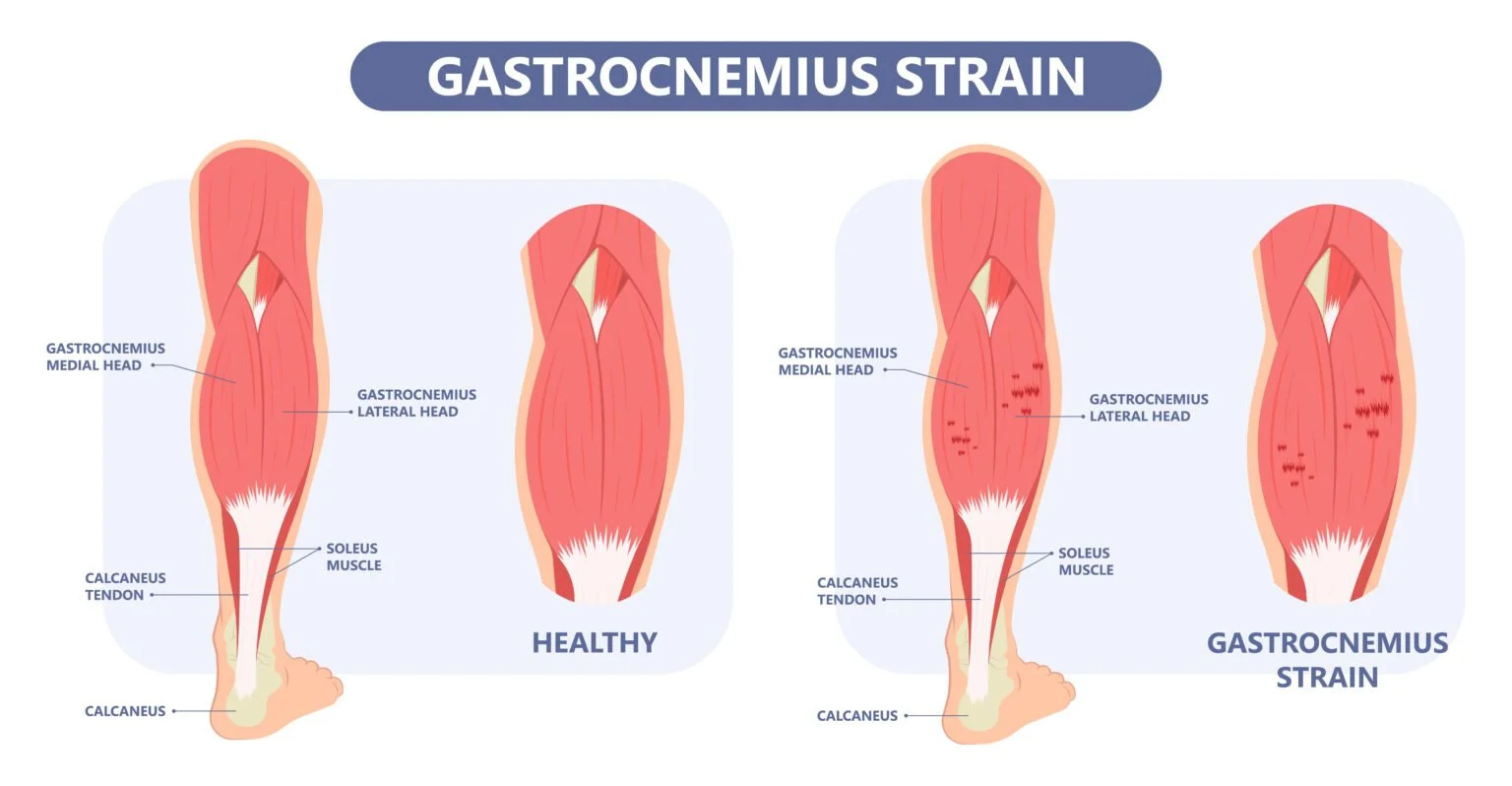
What's Actually Happening: The calf is made up of three muscles- the gastrocnemius, soleus, and plantaris— and a calf strain occurs when one of these muscles is suddenly overstretched, resulting in injury. The gastrocnemius is particularly vulnerable because it crosses three joints: the knee, the ankle, and the subtalar joint, meaning it's under load during nearly every phase of running. Calf strains are graded 1 through 3 based on severity: Grade 1 is a mild strain with minimal fiber damage causing localized pain and minimal strength loss, Grade 2 is a partial tear with more significant damage and weakness, and Grade 3 is a complete rupture requiring more intensive treatment. In runners, this injury tends to happen during sudden acceleration, hill sprints, or speed work, essentially any explosive movement that puts a sudden high demand on the calf.
How You Know It's This (Symptoms):
A sudden sharp pain or popping sensation at the back of the lower leg during activity
Immediate pain, tenderness, and tightness in the calf muscle
Swelling or bruising that develops in the hours following the injury
Difficulty walking normally, particularly pushing off with the affected foot
In more severe cases, a visible defect or gap in the muscle may be felt on palpation
What To Do Right Now:
Stop running immediately; continuing to push through a calf strain significantly increases the risk of a complete tear
Apply a compression dressing from the foot up through the calf in the first 48 hours to control swelling
Ice for 15–20 minutes every 2–3 hours in the first 48 hours
Partial weight-bearing walking should begin as soon as tolerable; complete immobilization isn't ideal, as early movement helps the muscle heal with better tissue quality
When to See a Professional:
Any felt or heard pop at the moment of injury, this warrants imaging to rule out a Grade 3 tear or plantaris rupture
Inability to walk without significant pain after 24–48 hours of rest
Visible bruising that spreads down toward the ankle, which can indicate a more serious tear
Severe injuries may require assessment by orthopedic or sports medicine specialists, as surgical repair is occasionally needed for complete ruptures
How to Treat It:
RICE in the first 48–72 hours: The initial treatment follows the standard soft tissue injury protocol. Rest, ice applied over a damp elastic wrap for 20 minutes every two hours, compression from the metatarsal heads upward through the calf, and elevation of the leg when resting. The elastic wrap under the ice doubles as compression and prevents direct skin contact. This phase should continue for 24–72 hours depending on severity.
What to avoid early: Soft tissue massage and moist heat application are specifically contraindicated in the acute phase since these techniques increase the risk of hemorrhage at the injury site. This is an important and commonly overlooked point — well-meaning massage in the first 48 hours of a calf strain can worsen internal bleeding and tissue damage.
Heel lifts: Raising the heel reduces the stretch and load on the gastrocnemius during walking, making daily activity more comfortable during recovery. A temporary heel lift worn in regular shoes can meaningfully reduce pain during the first week. The height of the lift is gradually reduced as healing progresses and range of motion returns.
Compression sleeve: Compression sleeves applied from the foot through the calf reduce swelling and provide proprioceptive feedback during the rehabilitation phase. Kinesio tape applied to the calf has been shown to reduce pain intensity immediately after running in endurance athletes and can be useful during the return to training phase.
Taping: Taping techniques applied by a physiotherapist or sports medicine clinician can offload the strained gastrocnemius during daily activity and early rehabilitation, providing symptom relief that allows earlier engagement with mobility work. Taping and massage should complement rather than replace structured strengthening exercises.
Soft tissue massage: Once the acute phase has passed (typically after 48–72 hours), soft tissue massage techniques help with the removal of interstitial fluid and improve tissue quality. Friction massage applied across the grain of the muscle fiber is appropriate in the subacute phase and can reduce scar tissue formation. Dry needling and acupuncture are used by some physiotherapists for calf strains, particularly for persistent muscle tightness, though the scientific evidence is currently limited.
Progressive strengthening: Rehabilitation should begin as soon as pain allows with passive and active stretches, followed by soft tissue techniques, progressive strengthening, and proprioception exercises. Stretching elongates the intramuscular scar tissue in preparation for strengthening — altering the degree of knee flexion during calf stretches isolates the gastrocnemius from the soleus, which is useful for targeting the specific injured structure. Strength training progresses from isometric contractions to isotonic work (concentric then eccentric) before returning to sport-specific loading.
Cross-training: Stationary cycling and swimming are appropriate once the acute phase has settled since both maintain cardiovascular fitness without the explosive push-off demands that stress the gastrocnemius. Deep water running is another excellent option that maintains running mechanics without impact loading.
The Recovery Plan:
Week 1–2: Rest from running, ice and compress consistently, and begin very gentle range of motion work as pain allows. Reducing pain and offloading the strained calf through rest and taping techniques is the priority during this phase.
Week 2–6: Progress to increased loading, proprioception and balance training, and full weight-bearing ambulation as tolerated. Rehabilitation should target identified strength deficits, and once those are addressed, recurrence rates drop significantly. Eccentric calf raises are a key exercise during this phase.
Beyond 6 weeks: Return to sport should not occur before the athlete is pain-free with full and symmetrical range of motion and full strength regained. Strengthening and stretching of the injured area should continue for several months after returning to running to mitigate the increased re-injury risk associated with scar tissue deposition during healing.
