Soleus Strain
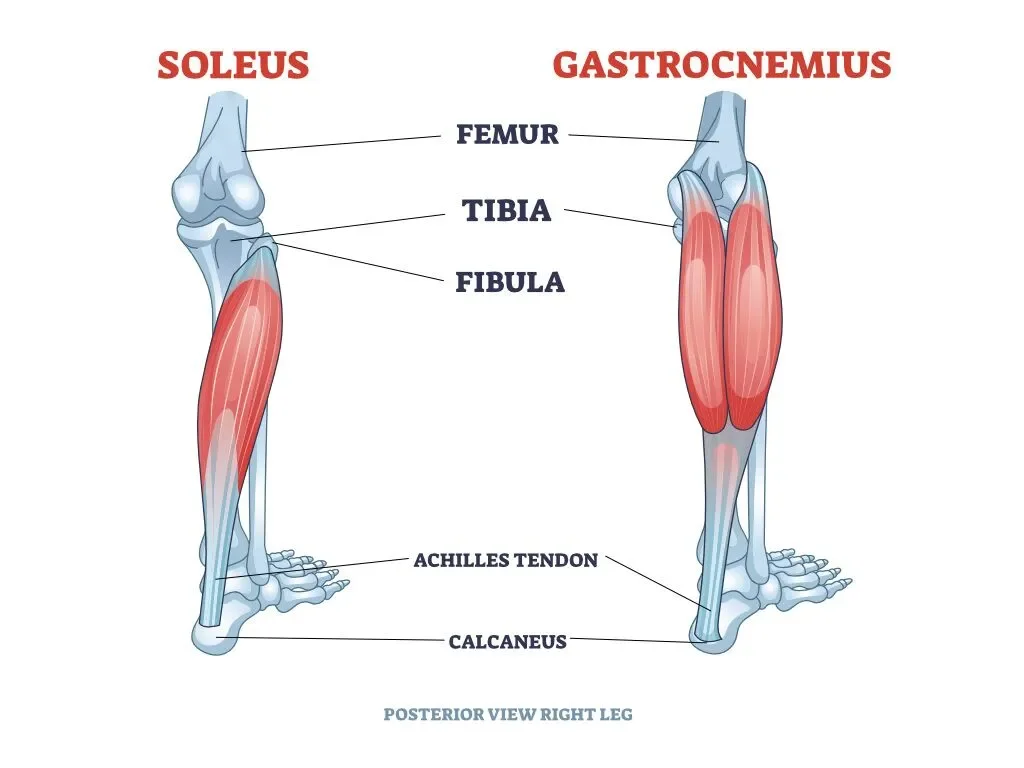
Severity: Mild to Moderate
Typical recovery time: 2–3 weeks for Grade 1; 4–8 weeks for Grade 2; several months for Grade 3
Can I keep running? No, you can begin a walk-run program only once symptoms stay at or below 2 out of 10 on the pain scale and settle within 24 hours after activity
What's Actually Happening: The soleus is the deep calf muscle sitting directly underneath the gastrocnemius. Unlike the gastrocnemius, which crosses the knee, the soleus only crosses the ankle, making it the primary load-bearer during steady distance running rather than explosive sprinting. It generates forces of 6.5–8 times body weight during running, making it one of the most heavily loaded muscles in the entire body during distance training. A soleus strain occurs most commonly in runners from a combination of load and fatigue, overtraining, increasing mileage too quickly, or adding too much hill work without enough adaptation time. Because the soleus is so heavily used even in easy running, it tends to heal more slowly than gastrocnemius strains and recurs more frequently when not fully rehabilitated.
How You Know It's This (Symptoms):
A dull, deep aching pain in the lower calf rather than the upper calf, which tends to be the gastrocnemius
Pain that flares during steady-effort runs, longer distances, or after hill work rather than during explosive sprints
A useful self-test: perform a calf raise with straight knees, then again with bent knees — with a soleus strain the bent-knee version hurts more, since bending the knee isolates the soleus
Tightness and localized tenderness lower in the calf, closer to the Achilles
What To Do Right Now:
Stop running and avoid all high-impact activity in the acute phase
Ice for 15–20 minutes, 2–3 times daily — apply through a damp cloth rather than directly on skin
Apply a compression wrap from foot to calf to control swelling
Avoid aggressive stretching in the early days, this can aggravate the tear rather than help it
When to See a Professional:
Any sharp, sudden pain followed by inability to continue activity or walk normally
Significant bruising or swelling that doesn't improve within 48–72 hours of rest
Symptoms that don't improve after 2–3 weeks of structured conservative management
Recurring soleus strains or repeated injuries signal an underlying biomechanical or training load issue that needs proper assessment
How to Treat It:
Ice vs Heat: Ice is the right call in the first 48–72 hours to reduce inflammation. After that, switching to heat before stretching or exercise helps relax the muscle and increase blood flow to the area. Apply moist heat for 10–15 minutes before any rehab work.
Foam rolling and massage: Light foam rolling or self-massage along the calf can improve circulation and reduce tightness, but avoid rolling directly over the most tender spot in the first week. Use a massage ball or foam roller along the surrounding tissue, working from the ankle upward. Deep transverse friction massage applied directly to the injury site has evidence supporting its use in reducing pain and promoting healing once the acute phase passes.
Stretching: Begin gentle bent-knee calf stretches once the acute pain settles, as the bent-knee position specifically targets the soleus rather than the gastrocnemius. Hold each stretch 10–30 seconds, preferably after a warm shower or heat application. Avoid bouncing or forcing the stretch.
Exercises: Start with isometric calf contractions where you press the foot down against resistance without movement — these load the muscle safely when it's still too painful for dynamic work. Progress to seated bent-knee calf raises, then eccentric heel drops as strength returns. Eccentric strengthening — where you lower slowly under load — is the cornerstone of soleus rehab and should be initiated as soon as pain allows.
Cross-training: Swimming and cycling are the best options during recovery since neither places significant load on the soleus. Avoid the elliptical early on as it can still aggravate the calf depending on the angle.
Taping: Calf taping or kinesiology tape can offload the muscle and provide symptom relief during the rehab phase, particularly useful if you need to stay on your feet. It complements the strengthening work but shouldn't replace it.
Footwear and gait: If overpronation or flat arches contributed to the strain, orthotics or supportive insoles can reduce the stress being placed on the soleus. Worth getting assessed if this injury keeps recurring.
The Recovery Plan:
Week 1–2: Stop running, ice consistently, and avoid aggressive stretching. Begin very gentle range of motion work and isometric loading as pain allows.
Week 2–4: Progress to bent-knee calf raises and eccentric heel drops. Begin heat therapy before rehab sessions. Light foam rolling on surrounding tissue is appropriate during this phase.
Week 4–8: Begin a walk-run protocol on flat ground only once you can complete 20–25 bent-knee heel raises without significant pain and without stiffness the following day. Increase total running time by no more than 10–20% per session and only if there's no flare-up within 24 hours.
