Lumbar Strain
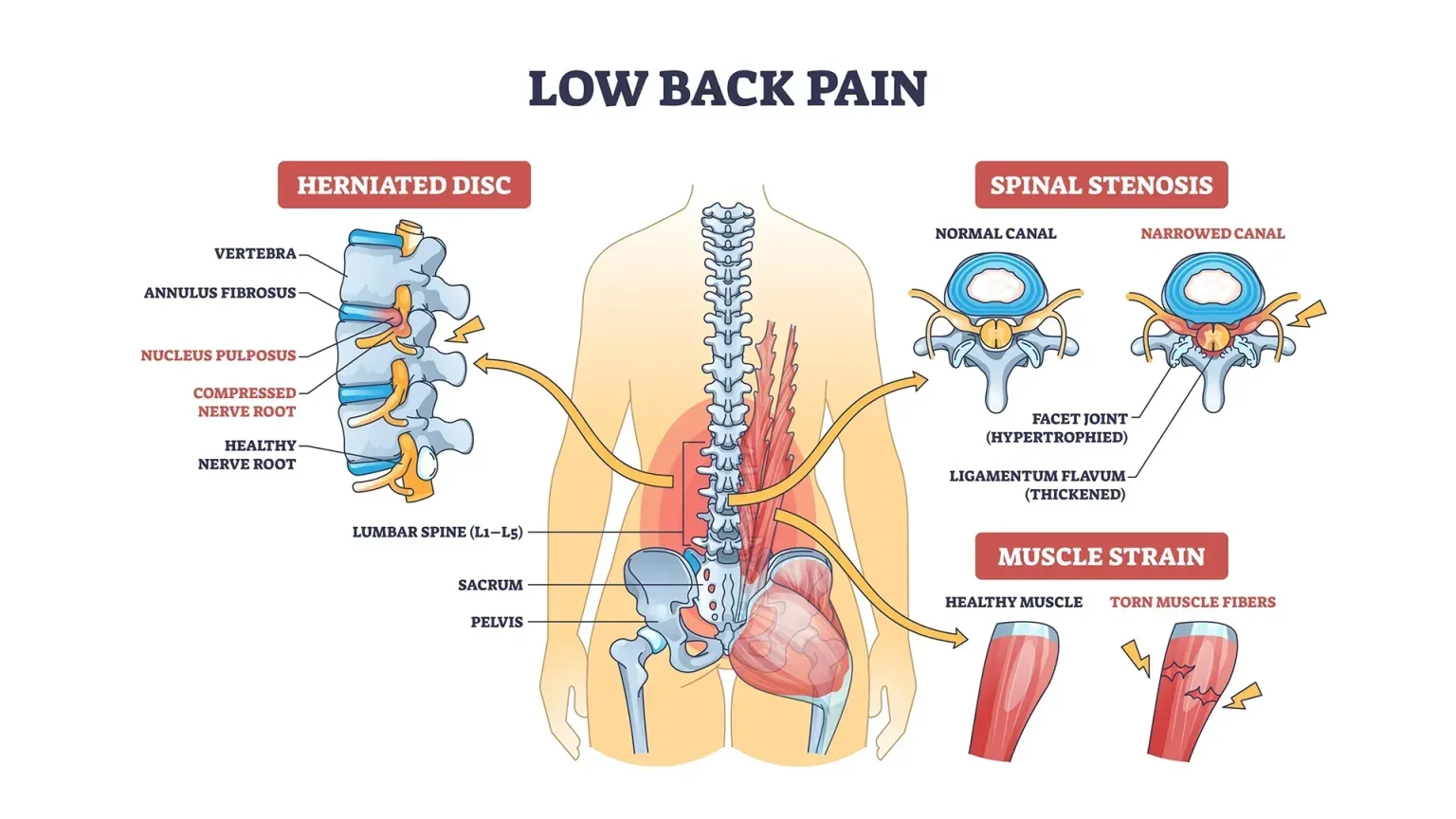
Severity: Mild to Moderate in most cases
Typical recovery time: More than 90% of patients recover fully within one month with appropriate management. Chronic lumbar strain can develop when contributing habits aren't addressed
Can I keep running? Light, easy running on flat surfaces is often compatible with mild lumbar strain. High-intensity efforts, sprinting, and anything that significantly loads the lumbar spine should wait until pain settles
What's Actually Happening: Lumbar strain is an injury to the muscles, ligaments, and tendons of the lower back in the paravertebral lumbar and sacral region. It occurs when these structures are subjected to physical stress greater than they can support, particularly when the lumbar spine is in a mechanically disadvantaged position, such as when rotated or fully flexed. Low back pain is the fifth most common reason for all physician visits globally, and over 80% of the population experiences at least one episode during their lifetime. For runners specifically, lumbar strain tends to develop from a combination of factors including weak core muscles that place greater load on the passive structures of the spine, poor running posture with excessive anterior pelvic tilt, sudden increases in training volume, and extended periods of sitting between training sessions that stiffen the lumbar muscles and reduce their capacity to absorb the repetitive impact forces of running. The prognosis is excellent: the vast majority of people recover fully within a month with conservative management.
How You Know It's This (Symptoms):
Aching, sharp, or cramping pain localized to the lower back, typically on one side, that doesn't radiate into the leg
Pain that is well-localized and non-radiating — the key distinguishing feature from sciatica, which produces shooting pain down the leg
Muscle spasms and stiffness in the lower back, particularly with bending or twisting
Pain that worsens with prolonged sitting, standing, or specific positions and eases with gentle movement
Tenderness directly over the lumbar paraspinal muscles on either side of the spine
What To Do Right Now:
Continue ordinary activities within the limits permitted by the pain — recent evidence clearly shows that staying active within tolerable limits leads to faster recovery than bed rest
Apply ice for the first 24–48 hours to reduce acute inflammation, then switch to heat to promote blood flow and relax the muscles
Over-the-counter NSAIDs or acetaminophen can help manage pain in the short term
Avoid movements or positions that significantly worsen pain while keeping gently active in everything else
When to See a Professional:
Any radiating pain, numbness, tingling, or weakness into the leg alongside lower back pain — these symptoms suggest nerve involvement beyond a simple muscle strain
Lower back pain accompanied by any changes in bowel or bladder function requires emergency evaluation
Pain that doesn't improve after 2–3 weeks of conservative management
Recurrent lumbar strains suggest an underlying weakness or movement pattern that needs proper assessment rather than repeated rest-and-return cycles
How to Treat It:
Stay active: The evidence consistently shows that continuing ordinary activity within pain limits leads to faster recovery than rest. Swimming, stationary cycling, and brisk walking are particularly good options since they don't put extra stress on the back while maintaining movement and circulation to the injured tissue.
Ice and heat: Ice reduces acute inflammation and is most useful in the first 24–48 hours. Heat promotes blood flow and muscle relaxation and is more appropriate once the acute phase settles. Both are appropriate on an as-needed basis throughout recovery for sudden flare-ups.
Core strengthening: Core strengthening provides more spine stability and is the most important long-term treatment strategy. A lumbosacral muscle corset that supports all trunk muscles, balancing the abdominal and back muscles, helps stabilize the lumbar spine. Exercises that emphasize proprioceptive activities such as Swiss ball work help expedite recovery and may prevent further injuries by improving the trunk muscles' ability to react to sudden changes in spinal position.
Manual therapy: Light muscle massage to relax the involved muscle groups has been reported to relieve muscle pain and spasms, making rehabilitation exercises more tolerable. Chiropractic manipulation and physiotherapy manual techniques are appropriate adjuncts to active rehabilitation rather than standalone treatments.
Posture and mechanics: Good upright posture while standing, sitting, and moving during everyday life takes unnecessary strain off the spinal structures. For runners, addressing anterior pelvic tilt and improving hip extension mechanics reduces the compensatory lumbar loading that contributed to the strain in the first place.
Shockwave therapy and acupuncture: A pilot study in elite athletes found that integrative rehabilitation including shockwave therapy, acupuncture, and spine function exercises significantly reduced pain scores and improved lumbar muscle activation patterns. Both are appropriate adjunct options for cases that aren't responding to standard conservative measures.
The Recovery Plan:
Week 1–2: Stay as active as pain allows, apply ice then heat, take NSAIDs as needed, and begin very gentle range of motion work. Avoid prolonged bed rest. Light walking and swimming are appropriate during this phase.
Week 2–4: Begin core strengthening exercises and proprioceptive work. Most patients recover fully within this window with appropriate management. Light, easy running on flat surfaces is appropriate once lower back pain has settled to a consistently manageable level.
Beyond 4 weeks: Gradually reintroduce normal training. Address any contributing factors, particularly posture, running mechanics, and core strength, to reduce the risk of recurrence. Low back strain may develop into a chronic condition if habits that contribute to the problem aren't changed alongside the physical recovery.
