Sciatica
Severity: Mild to Severe depending on the underlying cause
Typical recovery time: Most episodes resolve within 4–12 weeks with appropriate management.
Can I keep running? Often yes, and inactivity actually tends to make sciatica worse. However, severe disc-related sciatica and any case involving weakness or bowel and bladder changes requires medical evaluation before continuing to run
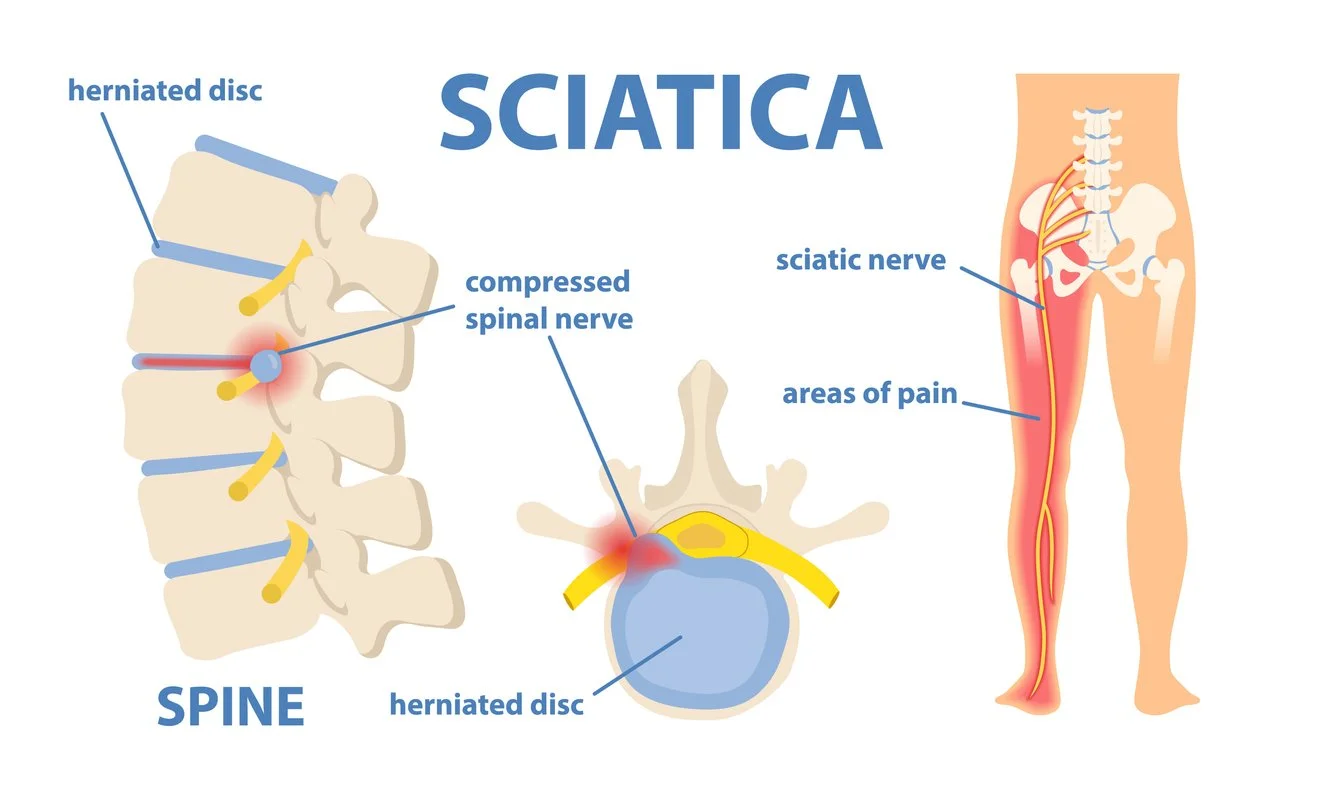
What's Actually Happening: Sciatica describes pain, tingling, or numbness that travels along the path of the sciatic nerve, which runs from the lower back through the buttock and down the back of the leg to the foot. A common misconception is that any lower back pain or radiating leg pain is sciatica — true sciatica specifically involves the sciatic nerve or an associated lumbosacral nerve root. The most common cause is a herniated or prolapsed disc in the lower lumbar spine pressing on a nerve root. However, for runners specifically, the cause is frequently not spinal at all: a tight piriformis muscle in the buttock compressing the sciatic nerve produces identical shooting leg symptoms in what is sometimes called false sciatica or piriformis syndrome. This distinction matters because disc-related sciatica requires a more cautious approach while piriformis-related sciatica responds well to targeted stretching and hip strengthening. Running mechanics directly affect how much load goes through the lumbar spine with every stride, and runners with weak glutes, poor posture, and excessive anterior pelvic tilt are placing their lumbar discs and nerve roots under significantly more stress than runners with efficient mechanics.
How You Know It's This (Symptoms):
Shooting, burning, or electric pain that travels from the lower back or buttock down the back of the thigh, sometimes extending into the calf or foot
Symptoms typically affect one leg rather than both
Pain, tingling, or numbness that worsens with prolonged sitting, which increases pressure on the lumbar discs and compresses the piriformis against the sciatic nerve
In piriformis-related sciatica, symptoms are often reproduced by crossing the affected leg over the other when seated and may be accompanied by tenderness deep in the buttock
What To Do Right Now:
Avoid prolonged sitting where possible, particularly positions that compress the lower back or cross the legs
Keep moving with gentle walking and movement rather than complete bed rest, since inactivity worsens sciatica symptoms and slows recovery
Ice or heat applied to the lower back or buttock can provide short-term pain relief — experiment to find which works better for your specific symptoms
If red flag symptoms are present, including leg weakness, saddle area numbness, or bowel and bladder changes, seek emergency medical evaluation immediately rather than waiting
When to See a Professional:
Any neurological symptoms including significant leg weakness, foot drop, or numbness in the inner thigh or groin
Symptoms that don't improve after 4–6 weeks of conservative management
Severe pain preventing normal daily activity or sleep
Before deciding on a treatment plan, knowing whether the cause is disc-related or piriformis-related changes everything about the approach, and a physiotherapist or sports medicine doctor can make this distinction with a proper assessment
How to Treat It:
Keep moving: The evidence is fairly clear that inactivity makes sciatica worse. Prolonged sitting increases pressure on the lumbar discs, tightens the hip flexors and piriformis, and reduces blood flow to the nerve. Gentle walking and maintaining movement within tolerable pain limits is part of the treatment, not just something to resume after recovery.
Piriformis stretching: Since piriformis-related sciatica is the most common presentation in runners, consistent piriformis stretching is one of the most impactful interventions. The figure-four stretch held for 30 seconds repeated 3 times, at least twice daily, is the most practical option. If stretching worsens symptoms, this may suggest a disc-related cause and professional assessment is needed before continuing.
Core and glute strengthening: Weak glutes and core muscles place greater compressive load on the lumbar spine during running. Building glute strength, particularly the glute max and medius, reduces the mechanical stress on the nerve root and is one of the most important long-term treatment strategies. Glute bridges, clamshells, and dead bugs are appropriate early exercises.
Running form correction: Three key form issues consistently found in runners with sciatica are anterior pelvic tilt from prolonged sitting and weak core muscles, contralateral pelvic drop from weak hip abductors, and overstriding which increases impact forces through the lumbar spine with every footstrike. Addressing these mechanics reduces ongoing nerve irritation during running.
Neural mobilization: Nerve gliding exercises gently move the sciatic nerve through its full range to reduce adhesions and restore normal nerve mobility. These are appropriate alongside other treatment but should be guided by a physiotherapist since aggressive nerve gliding can worsen symptoms if performed incorrectly.
NSAIDs: Appropriate for short-term pain management during the acute phase. Not a long-term solution since they address symptoms rather than the underlying cause.
Epidural steroid injections: For more severe disc-related sciatica not responding to conservative measures, an epidural steroid injection can reduce nerve root inflammation and provide a window of pain relief that enables more effective rehabilitation. Should be discussed with a spine specialist rather than pursued as a first-line treatment.
The Recovery Plan:
Week 1–4: Maintain gentle activity and walking, avoid prolonged sitting, begin piriformis stretching and gentle core activation. Ice or heat for symptom management. Avoid the specific running patterns that worsen symptoms while continuing light easy running if tolerable.
Week 4–12: Progress to glute and core strengthening, address running mechanics, and gradually increase training volume as symptoms allow. Most episodes of sciatica resolve within this timeframe with appropriate management. If symptoms are not improving or are worsening at this point, professional assessment and possible imaging are indicated.
Beyond 12 weeks: Persistent sciatica beyond 12 weeks warrants imaging to assess the underlying cause and guide further treatment decisions including possible injection or surgical consultation. For piriformis-related cases, consistent long-term hip strengthening and stretching as a permanent training habit is the most reliable strategy for preventing recurrence.
