Popliteal Tendinopathy
Severity: Mild to Moderate
Typical recovery time: 6–12 weeks
Can I keep running? Yes, on flat terrain, avoid downhill running and twisting
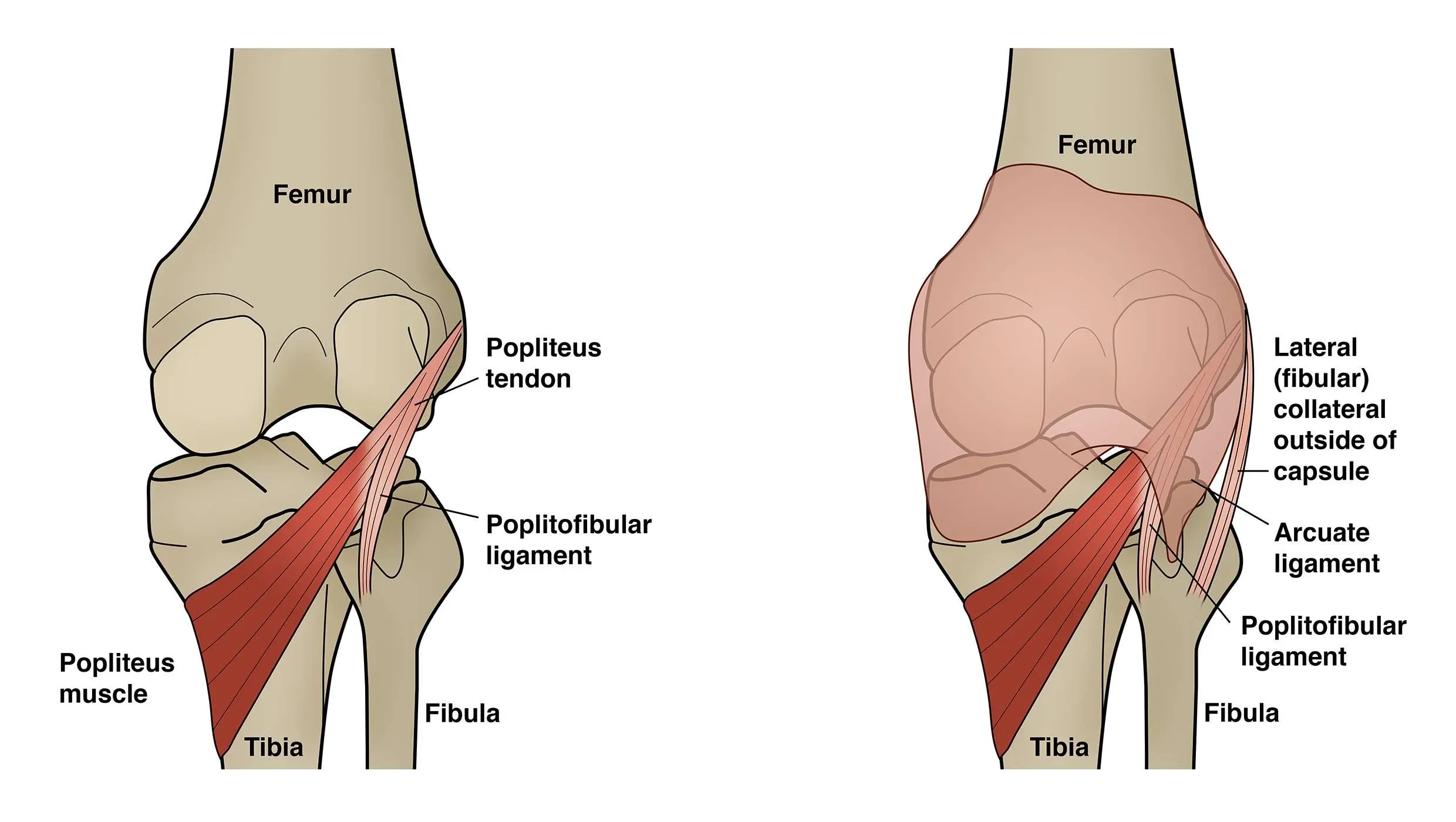
What's Actually Happening: The popliteus is a small but important muscle that helps unlock the knee during walking and stabilizes the joint during twisting and downhill movements. When the popliteus tendon becomes overused, strained, or irritated, it leads to pain, inflammation, and potential weakening of the tendon, which can impact knee stability and cause discomfort during weight-bearing activity. Though not widely known, this is a real and common cause of pain in the back and outer side of the knee, especially in athletes and runners. Over time, repetitive stress can lead to tendon overload, irritation, or small degenerative changes. In runners specifically, this tends to show up most in those who train on hills or uneven surfaces. It's worth knowing this condition is genuinely less studied than other knee injuries, so diagnosis sometimes takes longer simply because it's less commonly recognized.
How You Know It's This (Symptoms):
Tenderness when pressing on the back of the knee area
Pain when the leg is rotated inward
Pain specifically at the back or outer side of the knee, distinct from IT band pain, which sits more on the outer side, higher up
Lateral knee pain that's sometimes mistaken for IT band syndrome or a ligament strain
In more significant strains, difficulty fully straightening the leg without pain
What To Do Right Now:
Rest from aggravating activities, particularly downhill running or running on uneven surfaces
Ice the knee for 10–15 minutes every few hours
A compression wrap can help decrease swelling in the early stages
Avoid twisting or pivoting movements on the affected knee
When to See a Professional:
Pain in the back or outer knee that doesn't improve with rest and basic care
Any difficulty fully straightening the leg
Since symptoms overlap with IT band syndrome and Baker's cysts, a proper evaluation is important to confirm the correct diagnosis
Because this condition is less commonly diagnosed, getting an accurate assessment early can help avoid prolonged symptoms
How to Treat It:
Ice and compression: Ice applied to the back of the knee for 15–20 minutes after activity reduces acute inflammation and pain. An elastic wrap around the posterior knee provides compression and mild support during daily activity. These are the standard initial management tools during the acute phase before loading exercises begin.
Progressive tendon loading: As with all tendinopathies, the most important treatment principle is graduated loading rather than rest alone. Since popliteal tendinopathy is less researched than Achilles or patellar tendinopathy, exercise recommendations are largely extrapolated from broader tendinopathy literature. The progression moves from isometric contractions, where the muscle is activated without movement, to concentric and then eccentric work as pain allows.
Hip and knee mechanics correction: Treatment involves correcting any underlying issues with hip or foot mechanics since the popliteus compensates for problems elsewhere in the kinetic chain. A physiotherapist examining knee, hip, and foot mechanics together can identify whether overpronation, knee valgus, or hip weakness is placing extra demand on the popliteus during running.
Foam rolling and massage: Gentle foam rolling or massage gun work on the surrounding calf and hamstring muscles reduces the indirect tension placed on the popliteus tendon. Rolling directly over the back of the knee should be avoided during the acute phase as this can compress the irritated tendon directly. Once pain has settled, soft tissue work to the posterior lower leg and hamstring region supports rehabilitation by improving tissue quality and circulation in the surrounding structures.
Manual therapy: A physiotherapist can use hands-on techniques to restore normal joint mechanics at the knee and address soft tissue restrictions around the posterolateral knee. Manual therapy combined with progressive exercise tends to produce faster initial pain relief than either approach alone for tendinopathies in general.
Anti-inflammatory medication: NSAIDs like aspirin or ibuprofen are appropriate for short-term pain management during the acute phase, helping to manage pain enough to allow earlier engagement with rehabilitation. These address symptoms rather than the tendinopathic changes in the tissue, so they should be used alongside loading exercises rather than instead of them.
Oral corticosteroids: Oral corticosteroid medication is listed as an additional treatment option for popliteal tendinopathy in clinical literature for cases where pain is severe enough to prevent engagement with rehabilitation. A short course should only be pursued in consultation with a physician.
Cross training: Cycling and swimming are the best options since neither requires the knee-unlocking rotational movement that the popliteus controls during running. Avoid downhill running and uneven terrain until symptoms have fully settled, as these are the most reliable aggravating factors for this tendon.
The Recovery Plan:
Week 1–2: Rest, ice application, elevation, and an elastic wrap are the standard early treatment, along with anti-inflammatory medication for pain if recommended by a doctor. Avoid hills and uneven terrain completely.
Week 2–8: Treatment involves correcting any underlying issues with the hip or foot mechanics, as well as strengthening the leg and surrounding tendons, with physiotherapists examining knee, hip, and foot mechanics to determine the root cause and prevent future flare-ups.
Beyond 8 weeks: Most people recover within 6–12 weeks, depending on severity and consistency with rehab, and getting on top of the issue early leads to better results and helps avoid compensation injuries elsewhere.
