Pes Anserinus Bursitis
Severity: Mild to Moderate
Typical recovery time: A few weeks for mild cases; longer if symptoms aren’t addressed quickly
Can I keep running? Often yes on flat ground at reduced intensity
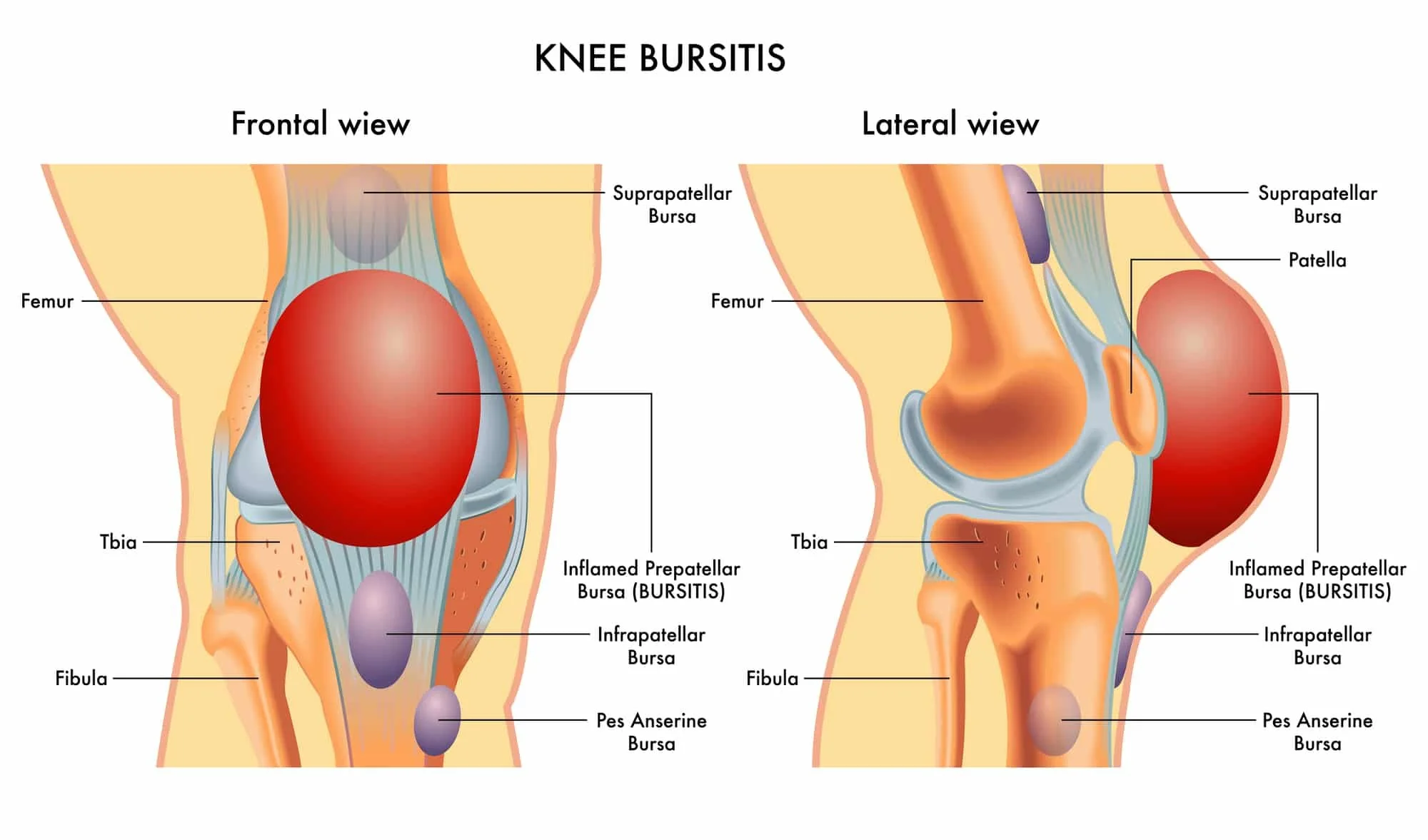
What's Actually Happening: The pes anserine bursa can become inflamed due to repetitive stress, friction, trauma, or biomechanical imbalances, resulting in pes anserinus bursitis. The bursa sits deep, where three muscle tendons: the gracilis, sartorius, and semitendinosus, attach to the shin bone just below the inner knee. For runners, this is most often aggravated by repetitive training on hills or inclines, in either direction. Sitting for extended periods can also cause pain due to a relative shortening of these three muscles, including sitting with the affected leg crossed over the other.
How You Know It's This (Symptoms):
Tenderness on the inner knee, just below the joint line, sometimes with visible swelling
Pain that's aggravated by activities involving knee and hip flexion, especially hill running
Pain in the inner knee area that's worse moving uphill or downstairs, with morning stiffness lasting more than an hour
Difficulty rising from a chair or getting out of a car due to discomfort
Pain and tenderness that can interfere with daily activity if left untreated
What To Do Right Now:
Avoid aggravating activities like squatting, running on uneven surfaces, or climbing stairs
Ice the area for 15–20 minutes, 2–3 times daily to reduce inflammation in the acute phase
Reduce mileage, avoid hills and stairs, and cut back on aggravating movements until pain calms down
Supportive footwear can help reduce impact and improve knee alignment
When to See a Professional:
Pain or swelling that doesn't improve with rest, ice, and activity modification
Symptoms severe enough to interfere with the quality of life
Since pes anserine bursitis can present with symptoms similar to a stress fracture, imaging like an X-ray may be needed to rule that out
Persistent symptoms despite several weeks of consistent conservative treatment
How to Treat It:
Ice massage: Ice massage is specifically recommended for pes anserine bursitis rather than just applying a cold pack. Using a foam cup frozen with water, apply ice directly to the inner knee in a circular motion for 10–15 minutes, every 4–7 hours during the acute phase. Ice massage provides more targeted and effective cold delivery to the bursa than a standard ice pack.
Hamstring and adductor stretching: A regular hamstring stretching program is the most consistently recommended conservative treatment and is the primary focus of physical therapy for this condition. Research shows that a program of hamstring stretching combined with quadriceps strengthening typically resolves symptoms within 6–8 weeks. Key stretches include standing hamstring stretches, seated hamstring stretches with a straight leg, and inner thigh stretches targeting the gracilis and adductors. These also serve as effective injury-preventive measures for athletes long-term.
Strengthening: A concurrent closed-chain quadriceps and pelvifemoral strengthening program is recommended alongside stretching. Hip abductor strengthening specifically addresses one of the most commonly identified contributors to pes anserine bursitis in runners by improving hip stability and reducing excessive femoral internal rotation during the stance phase of running. Progression moves from isometric hamstring contractions and quad sets in the early stage to single knee dips, squats, and resisted leg pulls as strength builds.
Elastic bandage and compression: Wrapping an elastic bandage around the knee reduces swelling and prevents further fluid accumulation. Apply carefully to avoid excessive friction over the inner knee.
Kinesiology taping: Research has shown kinesiology taping to be more effective than naproxen or physical therapy alone for reducing pain and swelling in pes anserine bursitis. It's a practical adjunct treatment during return to training and can be applied by a physiotherapist or learned for self-application.
Cross training: Avoid breaststroke swimming, which uses a kicking motion that directly loads the pes anserine tendons. Freestyle swimming and cycling are more appropriate cross-training options during recovery since neither places significant stress on the inner knee structures.
Sleeping position: Placing a small pillow or cushion between the thighs when sleeping on your side is a simple but effective tip for managing inner knee bursitis overnight, preventing the medial knee from being compressed against the opposite leg.
Corticosteroid injection: Intrabursal injection of local anesthetic and corticosteroid is a second-line treatment when conservative measures haven't resolved symptoms. Patients who don't respond to an initial injection are unlikely to benefit from further injections, so repeated injections should not be the default approach.
PRP injections: Platelet-rich plasma injections have demonstrated effectiveness in providing pain relief in 84.8% of patients with chronic pes anserine pain syndrome, making them a reasonable option for persistent cases not responding to conservative management or a single steroid injection.
The Recovery Plan:
Week 1–2: Reduce or eliminate activities directly causing the pain, focusing on adjustments to the training environment, intensity, and duration. Ice consistently and avoid hills entirely during this phase.
Week 2–6: Work on improving the flexibility and strength of the gracilis, sartorius, and semitendinosus muscles, which have been shown to reduce pain and inflammation of the bursa. Add exercises like clamshells, side planks, and hip thrusts to address weak glutes and core, which often contribute to extra stress at the pes anserine.
Beyond 6 weeks: Return to running is generally safe once the inflammation has resolved and flexibility and strength have improved to optimal levels. In general, the longer symptoms have been present, the longer the recovery will take.
