Meniscus Tears
Severity: Moderate to Severe
Typical recovery time: 4–6 weeks for minor tears with good blood supply; several months for larger or surgically treated tears
Can I keep running? Unlikely; minor tears without locking or instability may allow light running, but any clicking, locking, or giving way means stop and get it evaluated first
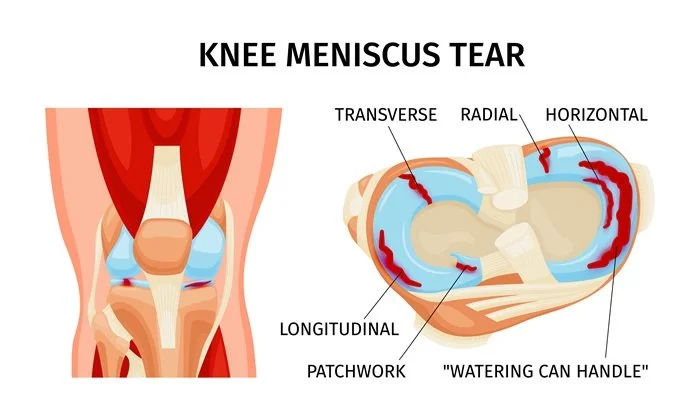
What's Actually Happening: Each knee has two menisci, one on the inside (medial) and one on the outside (lateral); wedge-shaped pieces of cartilage sitting between the thigh bone and shin bone that absorb shock, distribute load, and stabilize the joint. A meniscus typically tears when the knee is subjected to a sudden, forceful twist or deep squat under load, though in some cases repeated overuse or poor biomechanics gradually strain the cartilage until a minor movement finally causes the tear. The most common cause in runners, specifically, is a sudden knee twist. One important thing to understand: research shows that 61% of people in one study had meniscus tears on MRI scans but reported no pain or symptoms, meaning a tear doesn't automatically mean dysfunction, and the tear doesn't always need to fully heal for the knee to work normally again.
How You Know It's This (Symptoms):
Pain along the inner or outer joint line of the knee, depending on which meniscus is involved
Swelling that develops over the hours following the injury rather than immediately
A clicking, catching, or locking sensation when bending or straightening the knee
Stiffness and difficulty fully bending or straightening the knee
Pain that worsens with twisting movements, squatting, or changing direction
What To Do Right Now:
Stop running and avoid any twisting or pivoting movements on the knee
Ice for 15–20 minutes every few hours in the first 48 hours to manage swelling
Controlled, gentle movement can actually support recovery by improving blood flow to the area, but high-impact activity like running can make the tear worse if it's already causing pain
Get it properly evaluated; knowing the type and location of the tear determines everything about the recovery plan
When to See a Professional:
Any locking, clicking, or giving way sensation in the knee (usually indicates the tear needs imaging)
Swelling that doesn't improve after several days of rest
Any doubt about what's going on — because meniscus tear severity and type vary so much, a thorough medical assessment is the best way to determine what's safe
Pain that continues beyond 6–8 weeks despite conservative management
How to Treat It:
Physical therapy as the primary treatment: Non-operative treatment including physical therapy is the first-line approach for degenerative meniscus lesions and may be an appropriate option for some acute tears. A comprehensive program includes manual therapy, stretching, strengthening, and neuromuscular functional training addressing range of motion, muscle strength, and neuromotor control. Physical therapy has been shown to be equally effective as surgery for many tear types, particularly degenerative ones.
Ice therapy: Applying ice to the knee reduces inflammation and pain. Ice massage using a styrofoam cup frozen with water, applied directly over the joint line, is a practical method some runners find effective for localized pain management. Most effective when used consistently after activity during the inflammatory phase.
Compression sleeve: Compression sleeves have been proven to improve knee pain and improve a sense of stability in runners with meniscus tears. If you're considering running during recovery, a compression sleeve should be the first thing you try. Surgery should only be considered after a compression sleeve has been given an adequate trial.
Massage: Massage therapy reduces muscle tension around the knee, improves circulation, and promotes relaxation that aids the healing process. Friction massage applied at the joint line is included in documented rehabilitation protocols alongside ice therapy, joint mobilization, and strengthening. Deep tissue massage, myofascial release, or trigger point therapy are all appropriate depending on the specific muscle tension patterns present.
Cycling: Bicycle ergometry is specifically included in evidence-based meniscus rehabilitation protocols as a low-impact activity that keeps the joint moving and fed with nutrients without placing excessive compressive or twisting load on the tear. Cycling is the best cross-training option during meniscus recovery.
Hydrotherapy: Exercising in water reduces pain and stiffness while providing resistance for strength building. Water-based exercise allows early movement of the knee joint without the compressive forces of land-based activity and is particularly useful in the early recovery phase when running and walking are too painful.
Surgery considerations: Surgery should only be considered if pain continues beyond 3 months and is severe enough to prevent running, if physical therapy genuinely hasn't helped, if a compression sleeve doesn't improve symptoms, and if at least 6–8 weeks have been given for natural recovery. Meniscus repair is most suitable for younger patients with peripheral tears, while meniscectomy is reserved for symptomatic tears not amenable to repair.
The Recovery Plan:
Week 1–2: Rest from running and high-impact activity, ice regularly, and work on maintaining range of motion with gentle bending and straightening exercises. Swelling should begin to reduce.
Week 2–6: Tears in areas with better blood supply can heal within 4–6 weeks with adequate rest. Physical therapy is the first-line approach for many meniscus tears, and research has shown it to be equally effective as surgery for many types of tears, particularly degenerative ones. Focus on quad and hamstring strengthening to protect the joint.
Beyond 6 weeks: Low-impact activities like cycling are good during recovery because they keep the joint moving and fed with nutrients without placing extra strain on the tear. Surgery should only be considered if pain continues beyond 3 months and is severe enough to prevent running, if physical therapy hasn't helped, and if a compression sleeve doesn't improve symptoms. For those who do need surgery, many runners are back to light jogging within a couple of months if swelling is minimal and strength is restored, with more normal running typically in the 3–6 month range.
