Tarsal Tunnel Syndrome
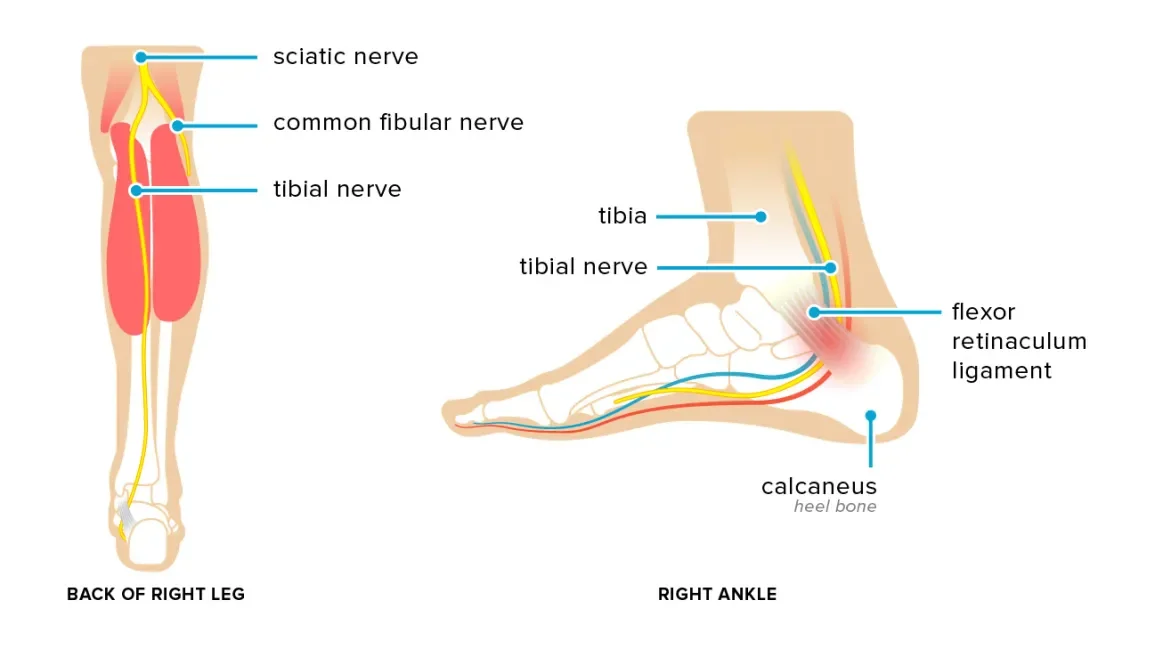
Severity: Mild to Severe depending on how long it's been present and how much nerve compression exists
Typical recovery time: Conservative treatment is generally successful within several weeks to months; chronic cases may require surgery
Can I keep running? Often possible at reduced intensity if symptoms are mild, but continuing without addressing the root cause typically worsens nerve compression over time
What's Actually Happening: The tarsal tunnel is a narrow canal located just behind the inner ankle bone, formed between the medial malleolus and a band of fibrous tissue called the flexor retinaculum. The posterior tibial nerve passes through this tunnel alongside tendons and blood vessels, providing sensation to the bottom of the foot and toes. When the structures inside the tunnel become compressed or the tunnel itself narrows, from swelling, scar tissue, flat feet, overpronation, or previous ankle injuries, the nerve gets squeezed, producing the burning, tingling, and shooting pain characteristic of tarsal tunnel syndrome. It's considered a rare compressive neuropathy but is particularly relevant to runners due to the repetitive stress placed on the foot and ankle during training, and it's commonly undiagnosed because its symptoms overlap with plantar fasciitis and Achilles tendinopathy. Successful treatment requires both an accurate diagnosis and addressing the specific biomechanical or structural factor causing the nerve compression, since treating symptoms without addressing the cause leads to recurrence.
How You Know It's This (Symptoms):
Burning, tingling, or shooting pain along the inner ankle and into the sole of the foot and toes, the nerve pain pattern is one of the most distinctive features
Numbness or pins and needles in the foot, particularly on the bottom and inner side
Pain that worsens during and after running and may persist for hours afterward
Tapping directly over the tarsal tunnel behind the inner ankle bone reproduces the tingling or shooting sensation in the foot
In more advanced cases, weakness in the small foot muscles and reduced sensation on the sole of the foot
What To Do Right Now:
Reduce running load immediately and avoid activities that directly reproduce the nerve symptoms
Avoid tight footwear that compresses the inner ankle area
Ice the inner ankle for 15–20 minutes after activity to reduce local swelling and associated nerve irritation
Do not self-treat this one without getting a proper diagnosis, tarsal tunnel syndrome closely mimics plantar fasciitis and Achilles tendinopathy, and treating the wrong condition delays recovery
When to See a Professional:
Any burning, tingling, or shooting pain in the foot that doesn't have a clear explanation
Symptoms that don't improve within 2–3 weeks of reducing training load and adjusting footwear
Numbness or weakness in the foot alongside the pain, these indicate more significant nerve involvement and need prompt assessment
Tarsal tunnel syndrome that goes undiagnosed and untreated can result in permanent nerve damage and chronic pain
How to Treat It:
Biomechanical correction: The most important treatment principle is identifying and correcting the mechanical factor causing nerve compression. Excessive pronation and flat arches are among the most commonly cited causes, custom orthotics that support the arch and control pronation directly reduce the compressive force on the tarsal tunnel during running. This is one injury where orthotics aren't just supportive, they're often the primary treatment.
Physical therapy: A well-designed physiotherapy program is a core part of conservative management and includes ankle strengthening exercises, stretching techniques, balance and agility training, and taping. One case study involving a 21-year-old track runner treated with physiotherapy interventions showed significant improvement in pain and return to sport with conservative management alone.
Neural mobilization: Nerve gliding or neural mobilization exercises — where the nerve is gently moved through its full range to break up adhesions and restore normal nerve movement — are a specific physiotherapy technique used for compressive neuropathies including tarsal tunnel syndrome.
Taping: Supportive taping around the inner ankle can temporarily relieve pressure on the tarsal tunnel during activity, providing symptom relief while the underlying cause is addressed.
Contrast baths: Alternating hot and cold-water immersion of the foot and ankle improves circulation to the compressed nerve and surrounding tissue and is used as part of physiotherapy management.
Corticosteroid injections: For cases not responding adequately to conservative measures, injections into the tarsal tunnel can reduce local inflammation and provide meaningful pain relief, most effective when combined with active rehabilitation rather than used alone.
Surgery (tarsal tunnel release): Reserved for chronic cases where conservative treatment has failed over several months. A surgeon makes incisions near the inner ankle to release the flexor retinaculum and decompress the nerve, giving the tibial nerve more space. Recovery from surgery starts almost immediately with pain management and wound care, progressing to rehabilitation and eventual return to running, most patients see significant improvement following surgical release when conservative treatment has been insufficient.
The Recovery Plan:
Week 1–4: Reduce running load, adjust footwear, begin orthotics or arch support if indicated, and begin physical therapy. Neural mobilization exercises and ankle strengthening are the focus during this phase alongside addressing the specific mechanical cause.
Week 4–12: Continue strengthening and neural mobilization, gradually increase running as symptoms allow. If symptoms haven't meaningfully improved after 4–6 weeks of consistent conservative treatment, corticosteroid injection is the appropriate next step.
Beyond 12 weeks: Persistent symptoms despite orthotics, physical therapy, and injection trial warrant surgical consultation. Most runners with accurate diagnosis and appropriate treatment — whether conservative or surgical — are able to return to training, though the timeline varies significantly based on severity and how long symptoms were present before treatment began.
