Stress Fractures of the Calcaneus
Severity: Severe
Typical recovery time: 6 weeks of protected weight bearing followed by a gradual return. Full return to running typically takes 3–6 months
Can I keep running: No, continuing to run risks progressing the fracture to a complete break, which requires surgery and a significantly longer recovery
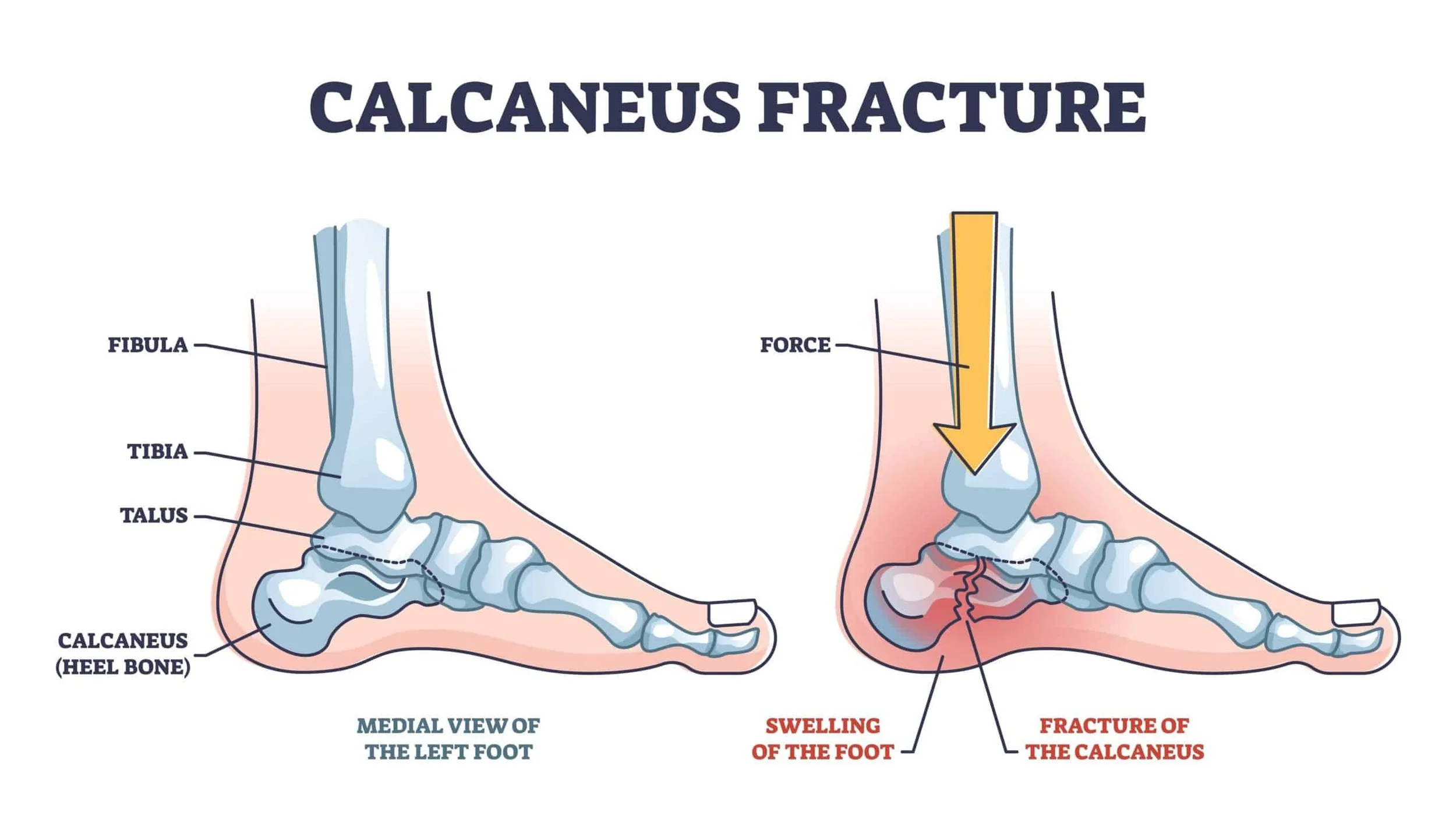
What's Actually Happening: The calcaneus is the largest bone in the foot and absorbs enormous forces during running, up to 5–7 times body weight with every stride. Calcaneal stress fractures are the third most common stress fracture in runners, developing when repetitive impact exceeds the bone's ability to remodel and repair itself. The classic location is the posterior-superior calcaneus, near where the Achilles tendon inserts into the heel bone. This injury is critically important to distinguish from plantar fasciitis, both cause heel pain, but the distinction matters completely because calcaneal stress fractures require 6–8 weeks of protected weight bearing while plantar fasciitis does not. The key difference is that plantar fasciitis pain is worst with the first steps of the morning and at the bottom of the heel, while calcaneal stress fracture pain is deep in the heel, worsens progressively with continued activity, and doesn't have the same morning pattern. Because calcaneal stress fractures are less well-known than plantar fasciitis, they are frequently misdiagnosed and undertreated, a mistake that can allow the fracture to progress to a complete break.
How You Know It's This (Symptoms):
Deep heel pain that worsens with every day of continued activity — signs of a stress fracture getting worse
Pain reproduced by squeezing the sides of the heel bone together with both hands
Swelling around the heel without a history of direct trauma
An inability to single-leg hop on the affected side without significant pain
Pain that may become present even at rest or at night in more advanced cases
Heel pain that started after a significant and rapid increase in training load
What To Do Right Now:
Stop running immediately and avoid all weight-bearing impact
A walking boot alone is insufficient for most calcaneal stress fractures, crutches with non-weight-bearing status is typically required in the early phase
See a doctor as soon as possible, early X-rays often appear completely normal even when a fracture is present, and MRI is the most sensitive imaging tool for confirming the diagnosis
Avoid NSAIDs in the early phase where possible, there is some evidence that anti-inflammatory medications may interfere with the natural inflammatory response involved in bone healing
When to See a Professional:
Any deep heel pain that progressively worsens with continued training
Night pain or pain at rest
Any positive squeeze test finding on self-assessment warrants imaging
History of previous stress fractures, eating disorders, or menstrual irregularity
All return-to-running decisions for this injury should be made in consultation with a healthcare provider, with imaging confirmation rather than symptom-based judgment alone
How to Treat It:
Protected weight bearing: The cornerstone of treatment. A walking boot reduces load on the healing bone during necessary daily activity, but non-weight-bearing with crutches is often required in the initial phase depending on severity. The goal is to eliminate the repetitive mechanical stress that caused the fracture while allowing the bone to heal.
Nutrition: Adequate calcium and vitamin D are essential for bone healing. If you've had multiple stress fractures, blood tests to check vitamin D levels and a DEXA scan for bone density are worth requesting, underlying nutritional deficiencies or low bone density significantly affect both healing speed and re-fracture risk.
Cross training: Swimming is the best option during recovery as it completely unloads the heel. Pool running with a flotation belt maintains running-specific fitness without bone stress. Anti-gravity treadmills (Alter-G) are used in clinical settings to allow progressive weight-bearing return before the bone is ready for full loading.
Focused shockwave therapy: Emerging evidence suggests that focused shockwave therapy may aid bony healing of stress fractures, worth discussing with a sports medicine specialist if recovery is slow, though this is not yet a standard first-line treatment.
Imaging confirmation: A repeat X-ray or MRI at 6–8 weeks should confirm healing before returning to full activity, the fracture should show evidence of new bone formation and resolution of bone marrow edema. Return to running should be guided by imaging confirmation.
Bone density workup: Any runner with a calcaneal or other stress fracture should be evaluated for underlying risk factors — nutritional insufficiency, female athlete triad, or relative energy deficiency in sport (RED-S). Addressing these systemic factors is as important as treating the fracture itself for preventing recurrence.
The Recovery Plan:
Week 1–6: Complete rest from running and high-impact activity. Non-weight-bearing with crutches as needed in the early phase, transitioning to a walking boot as pain allows. Begin swimming or pool running to maintain fitness. Focus on nutrition; adequate protein, calcium, and vitamin D.
Week 6–12: Once healing is confirmed on imaging, begin gradual return to weight bearing. Progress from walking to walking-jogging intervals on flat soft surfaces, increasing load only if there's no return of symptoms. Physiotherapy during this phase focuses on building leg strength and restoring normal movement patterns.
Week 12 onward: Full return to running typically takes 3–6 months, returning to full fitness after a calcaneal stress fracture often takes longer than runners expect, and premature return is the most common cause of re-fracture.
