Stress Fractures of the Metatarsals
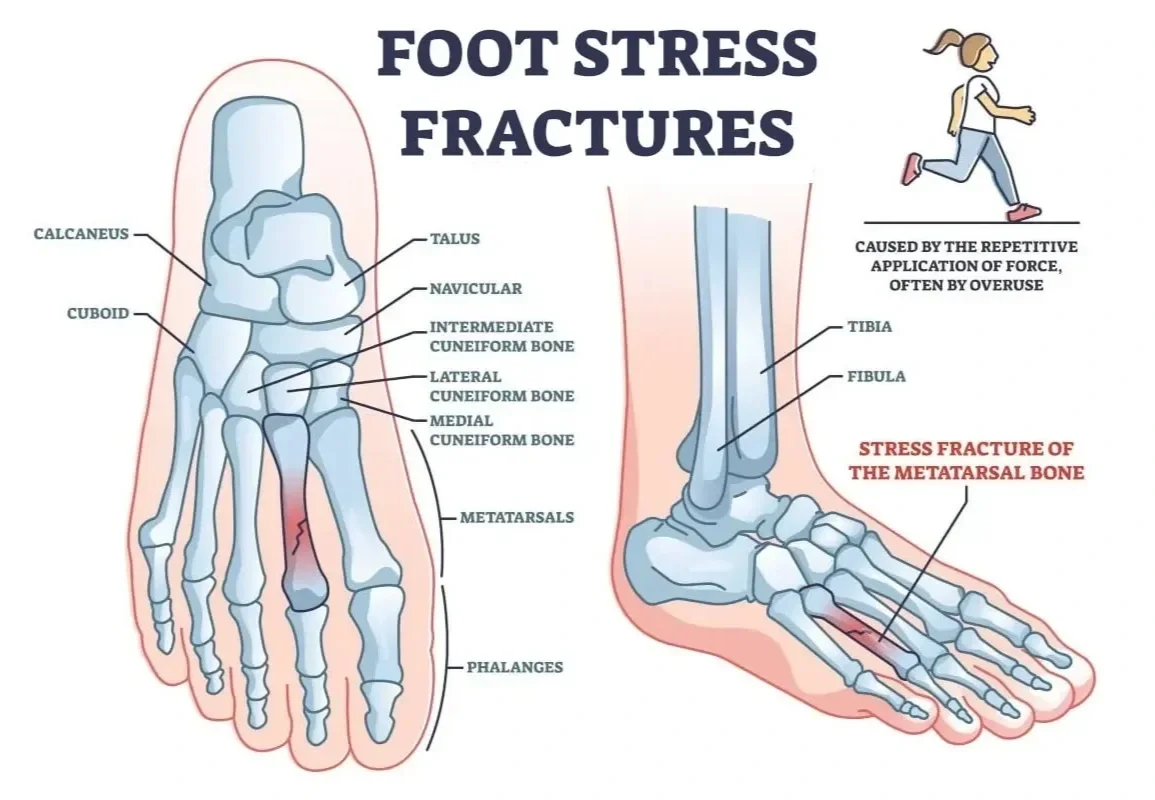
Severity: Moderate to Severe depending on which metatarsal is affected
Typical recovery time: 3–6 weeks for low-risk fractures; longer for higher risk metatarsals
Can I keep running? No, running must stop until imaging confirms healing, but non-impact cross training is usually permitted from early in recovery.
What's Actually Happening: Metatarsal stress fractures are the most common stress fractures of the foot, accounting for 38% of all stress fractures in athletes. The five metatarsal bones run from the midfoot to the toes and act as levers for walking, running, and jumping. Runners and military recruits most commonly sustain fractures of the second through fourth metatarsals, these are classified as low-risk locations because they have good blood supply and heal reliably with conservative treatment. The fifth metatarsal, the outer bone of the foot, is a different story. Particularly fractures at its base, known as Jones fractures, which are higher risk due to poorer blood supply and a greater tendency toward delayed or non-union healing. Like all stress fractures, these develop when bone is subjected to repetitive mechanical stress faster than it can remodel and repair itself — common triggers include sudden mileage increases, transitioning to harder surfaces, nutritional deficiencies, and under fueling.
How You Know It's This (Symptoms):
Gradual onset of pain in the forefoot that builds with activity and doesn't fully resolve with rest the way a muscle ache would
Point tenderness directly over one of the metatarsal bones when pressing on the top of the foot
Pain that starts during a run and progressively worsens rather than easing up. Continuing to run through it typically makes it significantly worse
Mild swelling over the affected area in some cases
Pain that may be present even during walking in more advanced cases
What To Do Right Now:
Stop running immediately — continuing to load a stress fracture significantly increases the risk of it progressing to a complete fracture
A walking boot or stiff-soled shoe reduces the bending force on the metatarsals during daily activity and is often the first step in management
Avoid NSAIDs if possible — there is some evidence that anti-inflammatory medications may inhibit the normal bone healing process, which includes an inflammatory phase
See a doctor promptly — early X-rays often appear normal even when a fracture is present, so an MRI may be needed for accurate diagnosis
When to See a Professional:
Any forefoot pain that doesn't improve with a few days of rest after a period of heavy training
Early X-rays are frequently normal for metatarsal stress fractures, so push for an MRI if pain persists and the X-ray is inconclusive
Outer foot pain specifically at the base of the fifth metatarsal should always be evaluated. Jones fractures have a much higher complication rate than other metatarsal fractures and sometimes require surgery
Multiple stress fractures or recurring bone stress injuries warrant a full workup including nutritional assessment and bone density testing
How to Treat It:
Offloading: Reducing the bending force on the affected metatarsal is the central treatment principle. A walking boot or surgical shoe achieves this for daily activity. The goal is not necessarily complete non-weight bearing but rather eliminating the specific mechanical stress causing the injury.
Cross training: Swimming and cycling are the best options during recovery since neither significantly loads the metatarsals. Pool running with a flotation belt is another good option that maintains running-specific fitness without bone stress.
Bone healing support: Adequate calcium and vitamin D intake are important for bone repair, deficiencies in either are a recognized risk factor for stress fractures. If you've had multiple stress fractures, a bone density assessment may be worth discussing with a doctor to rule out underlying nutritional or hormonal issues including RED-S (relative energy deficiency in sport).
Footwear: Stiff-soled shoes or carbon-plated racing flats reduce metatarsal bending forces during activity. Flexible minimalist shoes do the opposite; they increase metatarsal stress and are a known risk factor.
Fifth metatarsal fractures specifically: Jones fractures at the base of the fifth metatarsal require closer attention than other metatarsal fractures so if you have outer foot pain at the base of the fifth metatarsal, this warrants specific imaging and medical evaluation since the treatment approach and timeline differs from other metatarsal fractures.
The Recovery Plan:
Week 1–4: Complete rest from running and impact activity. Offload with a walking boot or stiff-soled shoe. Begin non-impact cross training as pain allows. Focus on nutrition including adequate protein, calcium, and vitamin D to support bone healing.
Week 4–8: Low-risk fractures of the second through fourth metatarsals generally heal with activity modification and protected weight bearing within this timeframe. Return to running is guided by symptoms and imaging. Before returning to running you should be able to walk without pain, jog in a straight line without limping, and have no tenderness on direct palpation of the fracture site.
Beyond 8 weeks: Fifth metatarsal fractures and cases that haven't healed on schedule may require a longer period of protection or surgical consultation. Gradually rebuild mileage using the 10% rule once cleared to run as the bone remains vulnerable to re-fracture for several weeks after symptoms resolve.
