Sever's Disease
Severity: Mild to Moderate
Typical recovery time: Most athletes return to sport within 2 months with proper management
Can I keep running? Often yes with modification
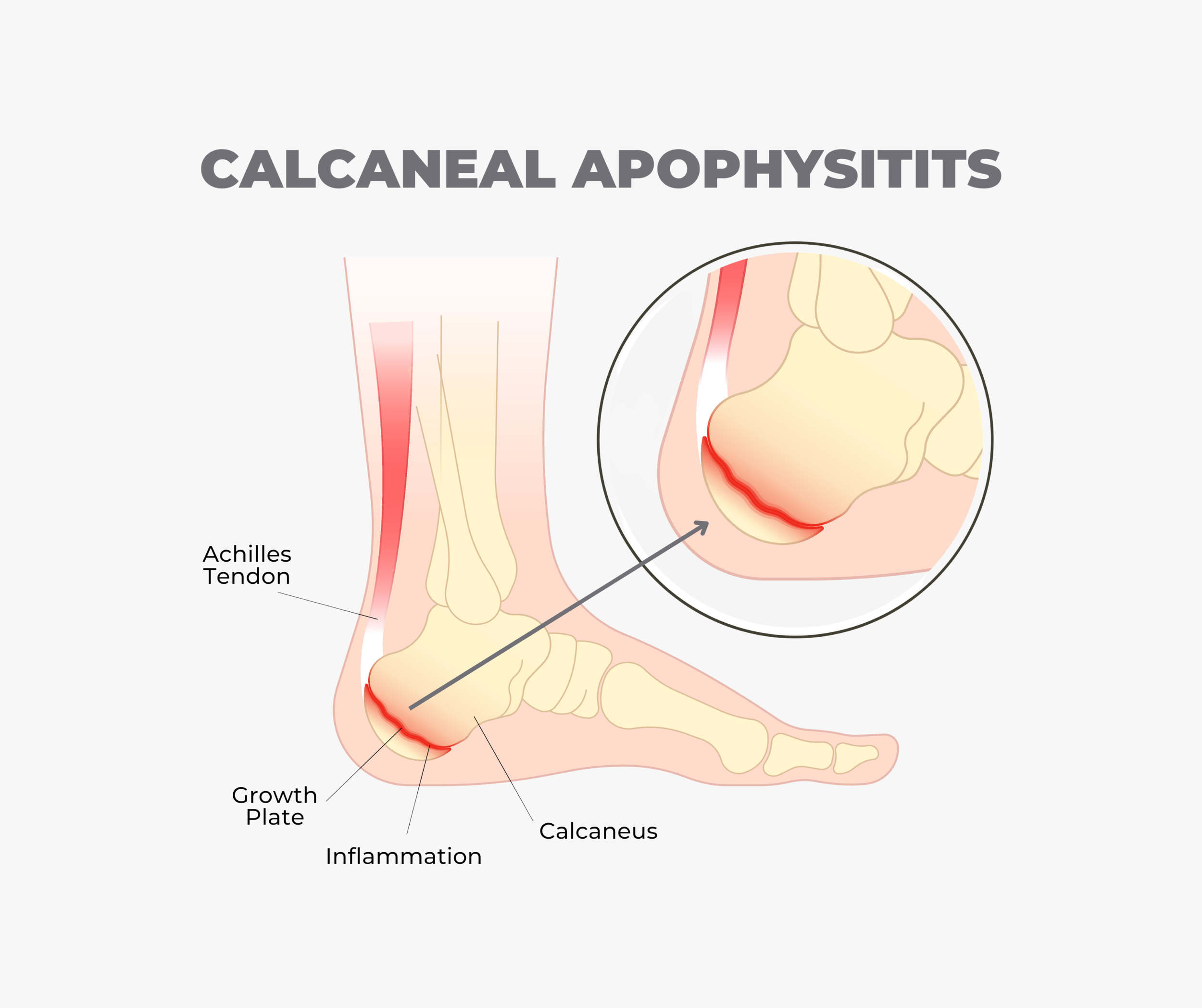
What's Actually Happening: Sever's disease is the leading cause of heel pain in children and adolescents who are physically active. It's not a disease in the traditional sense; it's an overuse condition affecting the calcaneal apophysis which is the growth plate at the back of the heel bone. During adolescence this growth plate is still developing and ossifying, making it vulnerable to the repetitive pulling force of the Achilles tendon during running and jumping. This tension from the calf muscles causes microtrauma and inflammation at the growth plate, producing the characteristic heel pain. It occurs most commonly in boys between ages 8–15 and girls between ages 7–12, with the difference in age ranges reflecting earlier skeletal maturation in girls. Risk factors include rapid growth spurts, tight calf muscles, flat feet or high arches, running on hard surfaces, and unsupportive footwear. The condition is self-limiting, it resolves on its own once the growth plate fuses, typically before age 17.
How You Know It's This (Symptoms):
Pain and tenderness at the back of the heel, specifically at the lower back of the heel bone rather than up the tendon
Pain that gets worse during and after running, jumping, or sport, and eases with rest
A useful squeeze test: squeezing the sides of the heel bone reproduces the pain, which helps distinguish it from Achilles tendinopathy where tenderness sits higher up the tendon
Walking on tiptoes may temporarily relieve discomfort by taking tension off the growth plate
What To Do Right Now:
Reduce activity to a level that keeps pain at 2 out of 10 or below
Ice the heel for 15–20 minutes after activity to manage discomfort
Avoid running on very hard surfaces where possible during the symptomatic period
Replace worn-out footwear, unsupportive shoes are a significant contributing factor
When to See a Professional:
Heel pain severe enough to cause a limp during normal walking
Pain that doesn't improve at all after 2–3 weeks of activity modification, heel lifts, and calf stretching
Any uncertainty about the diagnosis (plantar fasciitis, Achilles tendinopathy, and retrocalcaneal bursitis can all present with heel pain and require different treatment approaches)
How to Treat It:
Heel lifts: A small heel lift inside the shoe raises the heel slightly, reducing the tension the Achilles tendon places on the growth plate during activity. Heel lifts provide short-term symptom relief and are one of the simplest first-line interventions, they're widely used and available over the counter.
Custom orthotics: Custom foot orthoses have shown better outcomes than heel lifts alone in research, improving biomechanical alignment and providing more comprehensive offloading of the growth plate. Worth pursuing if basic heel lifts don't provide adequate relief.
Calf stretching: Tight calf muscles increase the traction force on the growth plate, so consistent calf stretching is a key part of management. Stretch both the gastrocnemius (straight-knee) and soleus (bent-knee) twice daily. Physical therapy that includes heel cord stretching and dorsiflexion strengthening has been shown to facilitate return to sport within about two months.
Kinesiology taping: Kinesio taping around the heel and Achilles area has been shown to enhance function during activity, though its pain relief benefit is comparable to placebo — it's useful as an adjunct during return to running rather than a standalone treatment.
Ice (cryotherapy): Effective for acute symptom management after activity. A frozen water bottle rolled under the heel is a practical method.
Shockwave therapy: ESWT has shown some promise for more persistent cases but lacks robust evidence specifically for Sever's at this stage, worth discussing with a sports medicine doctor if conservative measures haven't worked after 2–3 months.
Footwear: Supportive, cushioned footwear that doesn't compress the heel reduces mechanical stress on the growth plate during daily activity. Avoid minimalist shoes and cleats with rigid, thin heel cups during symptomatic periods.
The Recovery Plan:
Week 1–4: Reduce running volume and intensity to a pain-guided level. Begin heel lifts or orthotics, ice after activity, and start consistent calf stretching twice daily. Switch to softer surfaces where possible.
Week 4–8: Continue stretching and orthotics. Physical therapy including dorsiflexion strengthening alongside calf flexibility work has been shown to support return to sport within approximately two months. Gradually increase training load only if symptoms stay consistently at 2 out of 10 or below.
Beyond 8 weeks: Most athletes return to full training within 2 months with proper management, though some cases take longer — mean return to play in one retrospective study of youth athletes was approximately 60 days, with recurrent cases taking longer. The condition will ultimately resolve on its own once the growth plate fuses, typically by age 15–17.
