Metatarsalgia
Severity: Mild to Moderate
Typical recovery time: 6–8 weeks with early and consistent treatment
Can I keep running? Mild cases may allow continued running with load management and footwear modifications
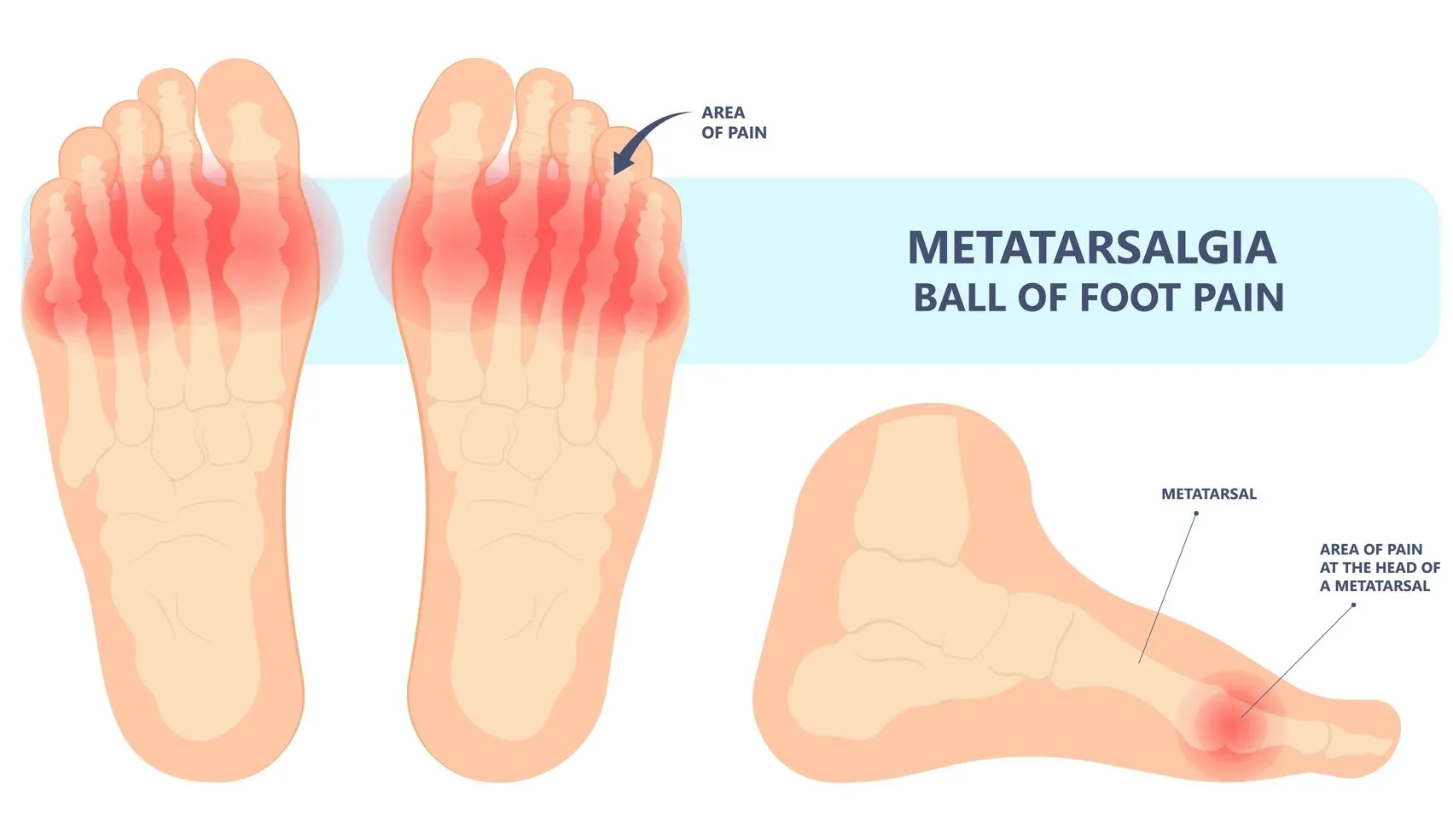
What's Actually Happening: Metatarsalgia refers to pain and inflammation in the ball of the foot, specifically at the metatarsal heads, the rounded ends of the long foot bones that sit just behind the toes. It's worth knowing that metatarsalgia is technically a symptom description rather than a single specific diagnosis, which is why identifying the underlying contributor is important for choosing the right treatment. Runners develop it from the repetitive impact forces placed on the forefoot with every stride, particularly during push-off. Contributing factors include sudden increases in mileage, worn-out or poorly cushioned footwear, a high-arched or flat foot structure, tight calf muscles that increase forefoot loading, and transitioning to minimalist or barefoot-style running. Left untreated and with continued high-impact loading, metatarsalgia can progress to stress fractures or contribute to Morton's neuroma development.
How You Know It's This (Symptoms):
Burning, aching, or sharp pain in the ball of the foot, typically centered under the second, third, or fourth metatarsal heads
A feeling of stepping on a bruise or a pebble that isn't there during running or walking
Pain that worsens with prolonged standing, running, and going barefoot on hard floors
An interesting quirk specific to runners: mild metatarsalgia may actually feel less painful during running than during fast walking, because walking involves more forefoot push-off while running can shift load toward the larger leg muscles — though this doesn't mean running is safe to continue unchanged
Gradual onset over days to weeks rather than a sudden acute event
What To Do Right Now:
Reduce mileage and avoid hard surfaces immediately, continued high-impact loading on an already irritated forefoot is the most common reason metatarsalgia becomes a chronic problem
Add a metatarsal pad just behind the ball of the foot
Ice the forefoot for 15–20 minutes after activity
Check your footwear; worn-out shoes with compressed cushioning and shoes with a narrow toe box are two of the most common contributing factors and should be addressed immediately
When to See a Professional:
Pain that doesn't improve after 2–3 weeks of reducing mileage, adjusting shoes, and adding metatarsal padding, metatarsalgia rarely resolves on its own when the underlying cause goes unaddressed
Any concern that the pain might be a stress fracture rather than soft tissue irritation
Numbness or tingling in the toes alongside ball-of-foot pain, which could indicate Morton's neuroma developing
How to Treat It:
Metatarsal pads: One of the most effective and immediate interventions. Placed just behind the ball of the foot inside the shoe, they redistribute load away from the metatarsal heads. Available over the counter and worth trying before custom orthotics.
Custom orthotics: For runners with underlying structural contributors, high arches, flat feet, or abnormal foot mechanics, custom orthotics with forefoot offloading provide more durable long-term relief than metatarsal pads alone and address the root mechanical cause.
Footwear: Adequate cushioning under the forefoot and a wide enough toe box are essential. Minimalist and barefoot-style shoes significantly increase metatarsal head loading and are a known aggravating factor. Stiff-soled shoes reduce the bending forces through the metatarsals during push-off.
Stretching: Tight calf muscles increase forefoot loading by limiting ankle dorsiflexion, consistent calf stretching (both gastrocnemius and soleus) reduces the demand placed on the metatarsals during running. Toe stretches and plantar fascia stretches help maintain forefoot mobility.
Strengthening: Intrinsic foot muscle strengthening — short foot exercises, toe spreads, and towel scrunches — builds the muscular support system that helps distribute load more evenly across the metatarsals.
Massage: Gentle massage of the ball of the foot improves circulation and reduces localized tension. A massage ball or frozen water bottle rolled under the forefoot is practical and accessible.
Ice: Applied to the forefoot after activity to manage discomfort during flare-ups. Most effective when combined with load reduction rather than used as a standalone treatment.
The Recovery Plan:
Week 1–2: Reduce or eliminate running on hard surfaces. Add a metatarsal pad, check and replace footwear if needed, and ice after any activity. Begin calf stretching twice daily.
Week 2–6: Begin intrinsic foot strengthening and continue load management. If symptoms haven't improved meaningfully after 2–3 weeks of footwear changes and metatarsal padding, custom orthotics are the appropriate next step. Light running on soft surfaces may be possible if pain stays consistently low and settles within 24 hours.
Week 6–8: Gradually rebuild mileage as symptoms allow. Most cases improve within 6–8 weeks with consistent conservative treatment.
