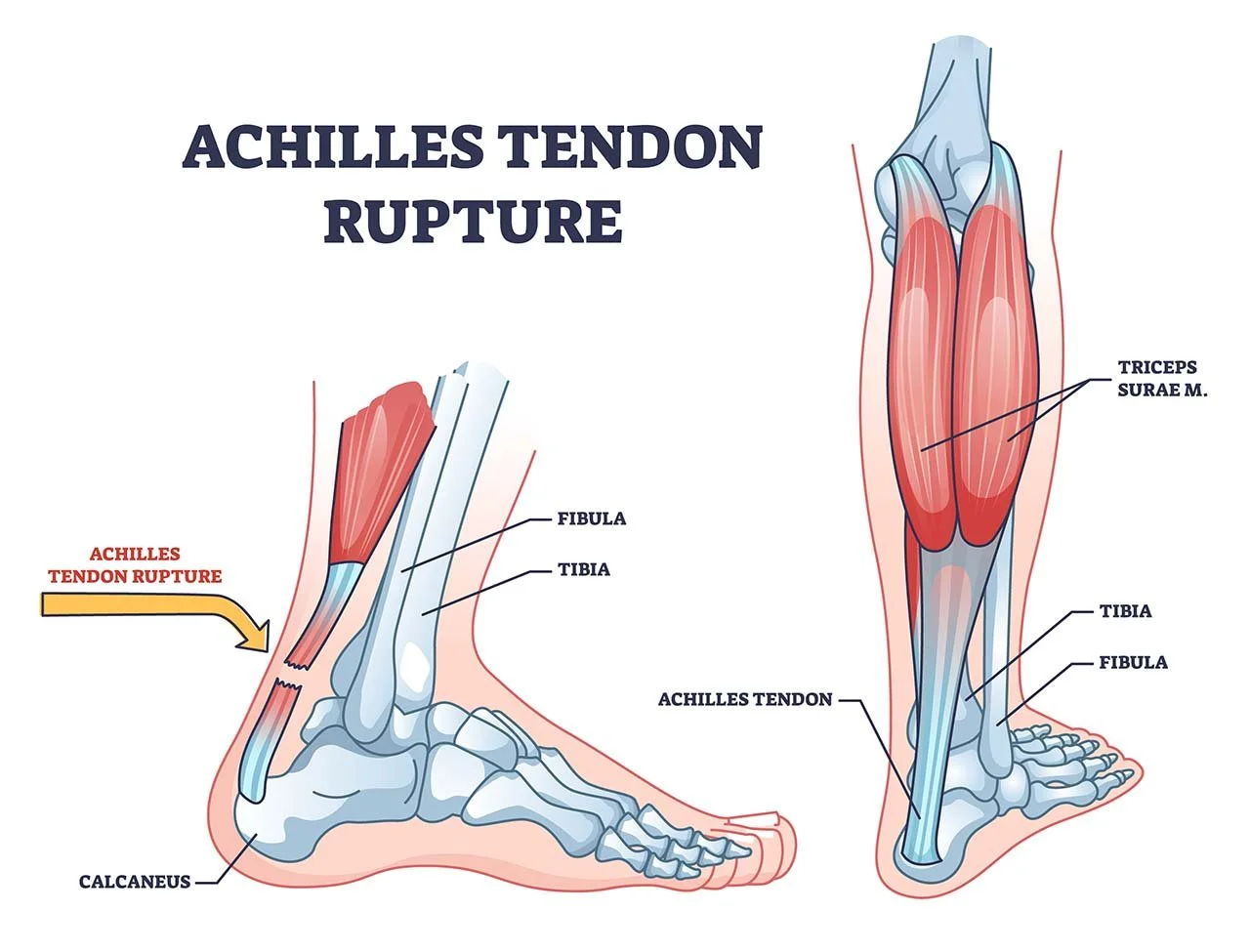
Achilles Tendon Rupture
Severity: Severe
Typical recovery time: 6–12 months for return to full running, regardless of whether treated surgically or conservatively; this is one of the longest recovery timelines of any running injury
Can I keep running? No, this is a medical emergency requiring immediate evaluation and complete cessation of all impact activity
What's Actually Happening: The Achilles tendon is the largest and strongest tendon in the body, yet it's also one of the most commonly ruptured. A rupture occurs when the tendon partially or fully tears, most often at the area roughly 2–6 centimeters above the heel bone, the same region most vulnerable to tendinopathy. It's considered one of the most common serious sports injuries overall. In runners, ruptures typically occur during a sudden, explosive movement like accelerating, jumping, or pushing off hard that places a force on the tendon that exceeds its capacity. Existing tendinopathy, fluoroquinolone antibiotic use, and a sudden return to running after a period of inactivity all significantly increase rupture risk.
How You Know It's This (Symptoms):
A sudden, sharp pain at the back of the ankle, often described as feeling like being kicked, struck, or hit with something
A popping or snapping sound at the moment of injury
Immediate difficulty pushing off the foot or rising onto the toes
Swelling and bruising around the heel and lower ankle developing within hours
A palpable gap or dip in the tendon where the tear occurred in complete ruptures
What To Do Right Now:
Stop all activity immediately and do not attempt to walk it off
Apply ice and elevate the leg to control swelling
Immobilize the ankle in a slightly downward-pointing position; this is instinctive and also clinically appropriate for the early phase
Go to an emergency room or see a doctor the same day
When to See a Professional:
This injury requires professional evaluation from the moment it happens. Do not wait!
Re-rupture is a serious risk even after full recovery, making professional guidance during the return-to-sport phase just as important as the initial treatment
How to Treat It:
This is one of the few injuries on this site where the treatment decision is truly complex and not clearly resolved by current evidence. Here's what the research shows:
Surgery: Surgical repair has a significantly lower re-rupture rate and may lead to faster recovery of calf strength. However, it carries real risks including wound complications, infection, scar tissue formation, and nerve damage. A 2025 meta-analysis confirmed that surgery reduces re-rupture risk but found no significant difference in long-term functional scores between surgical and non-surgical patients.
Conservative (non-surgical): Conservative treatment using a functional brace with early weight bearing avoids surgical risks and produces comparable long-term functional outcomes in most patients — one study found no significant difference in return to sport rates, ankle range of motion, or rupture scores between surgical and non-surgical groups. The main downside is a higher re-rupture risk compared to surgery.
The current consensus: There is no gold standard — treatment is a shared decision between patient and doctor based on age, activity level, rupture severity, and personal risk tolerance. For young competitive runners, the lower re-rupture risk of surgery is often the deciding factor. For others, conservative management with early functional rehabilitation is a legitimate and well-supported option.
Physical therapy: Structured rehabilitation is essential in both cases. It focuses on gradual Achilles loading, calf strengthening, proprioception, and a progressive return to impact activity.
The Recovery Plan:
Week 1–6: Immobilization in a functional boot with the heel elevated, with early weight bearing as tolerated. Swelling management, gentle range of motion exercises, and non-impact activities like swimming as soon as the acute phase settles.
Week 6–12: Progressive weight bearing, transition out of the boot, begin structured physical therapy with gentle tendon loading and calf strengthening. Cycling is typically introduced during this phase.
Week 12–6 months: Gradual return to impact activity beginning with walking, then jogging on flat ground. Calf strength and single-leg heel raise capacity guide progression rather than fixed timelines.
6–12 months: Return to full running and sport. Most runners need the full 6–12 months before returning to previous training levels; pushing this timeline is the most common cause of re-rupture.
