Warm Up & Cool Down
Why it matters: A proper warm-up improves athletic performance by up to 20% and prepares your muscles, joints, and nervous system for the demands of training. A proper cool-down helps flush metabolic waste, reduces post-run stiffness, and signals your body to begin the recovery process. Neither takes more than 10 minutes. Both are consistently skipped by runners who then wonder why they feel stiff, slow, or injured.
The most important thing to know about stretching;
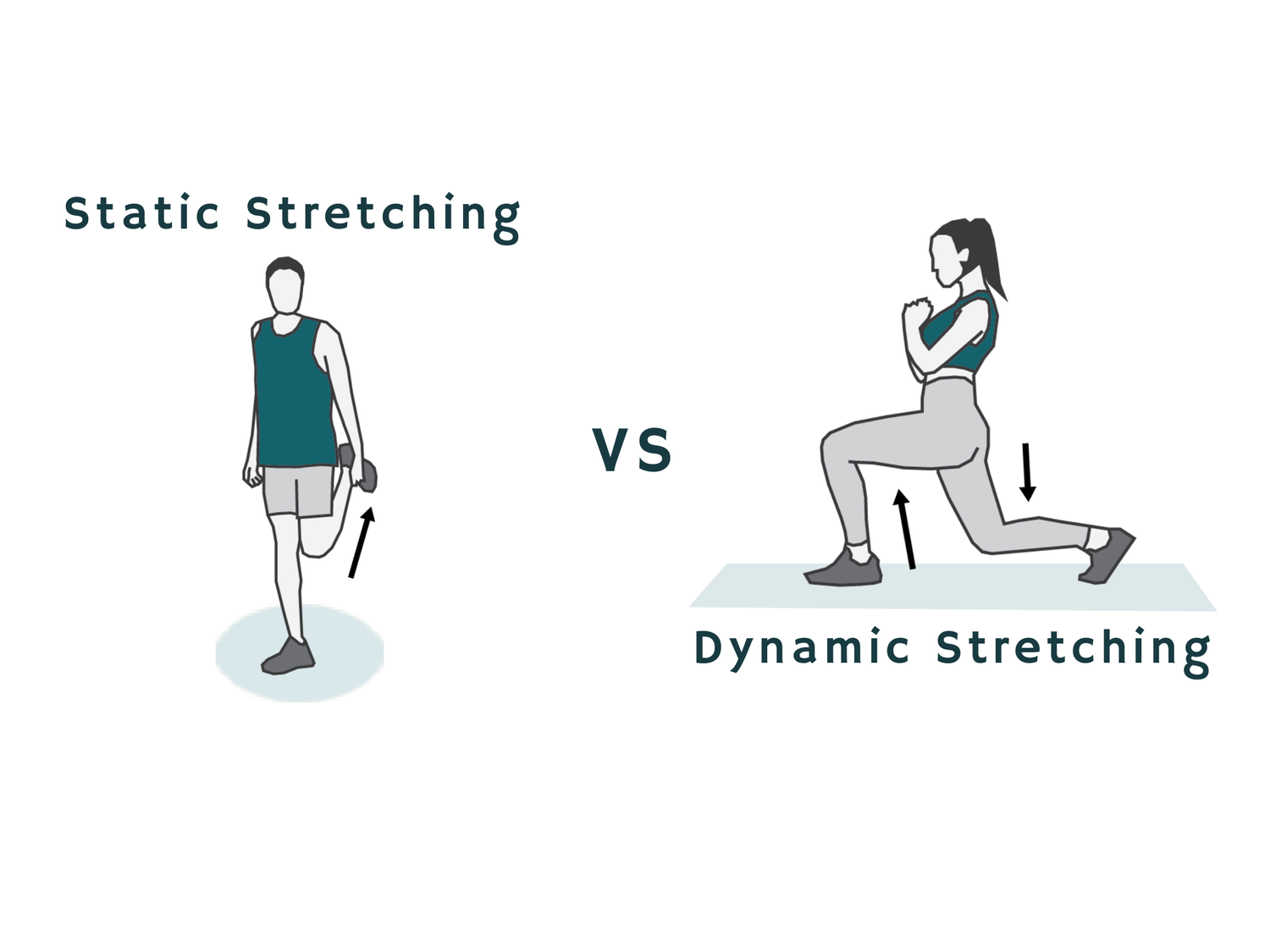
Static stretching before a run — holding a stretch for 30 seconds — has been shown to reduce explosive performance and impair running economy when done immediately before training. It's not just unhelpful before a run, it can actively make you slower. Dynamic stretching before a run and static stretching after a run is the correct order, and the research is consistent on this point.
Signs your warm-up isn't working:
Feeling stiff and sluggish for the first mile of every run
Taking several minutes to find your rhythm at the start of workouts
Getting injured most often at the beginning of sessions rather than the end
Muscle strains happening during the first explosive effort of practice
Before your run — Dynamic Warm-Up:
Dynamic warm-ups involve controlled movements that progressively increase range of motion, heart rate, and muscle temperature. They prepare the nervous system for the movement patterns about to be demanded of it, which is particularly important for sprinters whose first effort of the day may be near-maximal.
Start with 3–5 minutes of easy jogging or brisk walking before doing any of the movements below. Cold muscles don't respond well to dynamic work — the jog is the foundation of the warm-up, not optional.
Dynamic warm-up movements for runners:
Leg swings (forward and back): Stand next to a wall for balance and swing one leg forward and backward in a controlled arc, gradually increasing the range with each rep. 10 reps each leg. Directly warms up the hip flexors and hamstrings in the exact movement pattern of running.
Lateral leg swings: Same as above but swinging side to side across the body. 10 reps each leg. Warms up the hip abductors and adductors that stabilize the pelvis during running.
Walking lunges: Step forward into a lunge, pause briefly, step through to the next lunge. 10–12 reps. Activates the glutes, quads, and hip flexors together in a running-specific movement pattern.
High knees: Short, controlled marching with knees driving up toward the chest. 20 meters out and back. Warms up the hip flexors and reinforces the knee drive pattern used in all running.
Butt kicks: Jogging while driving the heel up toward the glute with each step. 20 meters out and back. Warms up the hamstrings through their functional range.
Hip circles: Standing with hands on hips, draw large circles with your hips in both directions. 10 reps each direction. Warms up the hip joint through full rotational range.
Calf raises: 15–20 slow calf raises on both feet, then 10 on each leg. Directly prepares the calf and Achilles for the push-off forces of running.
A-skips: A marching drill with an exaggerated knee drive and arm swing. 20 meters out and back. Specific to sprinters but beneficial for all runners — reinforces proper mechanics and warms up the entire lower chain simultaneously.
For sprinters specifically
Sprinters need a more extensive warm-up than distance runners because the demands of a maximal sprint are dramatically higher than easy jogging. Add progressive accelerations, 60–70%, 80%, and 90% effort strides over 60–80 meters, after the dynamic warm-up and before any maximal effort. Sprinting cold is one of the most reliable ways to strain a hamstring.
After your run — Cool Down:
The cool-down brings your heart rate and breathing gradually back to resting levels and is the appropriate time for flexibility work. Muscles are fully warm after a run, making this the most effective time for static stretching to improve or maintain flexibility.
5 minutes of easy jogging or walking to gradually lower heart rate before any stretching.
Static stretches to include after every run:
Calf stretch (straight leg): Lean against a wall with one leg extended back, heel flat on the ground. Hold 30–45 seconds each leg. Targets the gastrocnemius.
Calf stretch (bent knee): Same position but with the back knee slightly bent. Hold 30–45 seconds each leg. Targets the soleus, the deeper calf muscle most loaded during distance running.
Hip flexor lunge stretch: Kneeling on one knee, shift your weight forward until you feel a stretch at the front of the back hip. Hold 30–45 seconds each side. Addresses the tightness that develops from sitting all day and then running.
Standing quad stretch: Balance on one leg and pull the other foot toward your glute. Hold 30–45 seconds each leg. Keep hips level and don't arch the lower back.
Seated hamstring stretch: Sit with one leg extended and reach toward your foot without rounding your lower back excessively. Hold 30–45 seconds each leg.
Figure-four glute stretch: Lie on your back, cross one ankle over the opposite knee, and gently pull the uncrossed leg toward your chest. Hold 30–45 seconds each side. Targets the piriformis and deep glute — one of the most useful stretches for runners.
IT band stretch: Cross one leg behind the other and lean away from the back leg, reaching the same-side arm overhead. Hold 30 seconds each side.
What actually prevents injury:
Static stretching alone has not been shown in research to consistently reduce injury rates in runners. The injury prevention benefit of a warm-up comes primarily from the dynamic movements, the progressive increase in muscle temperature, and the neuromuscular preparation — not from holding stretches. Stretching improves and maintains flexibility over time, which is a worthwhile goal, but it is not a substitute for the rest of your injury prevention habits.
The student athlete time problem:
Practice is already long. Here's how to make this realistic:
The dynamic warm-up takes 8–10 minutes and your coach should be building this into practice — if they're not, do it yourself before the team warm-up starts
The cool-down can be shortened to 3–4 key stretches on the busiest days — prioritize calves, hip flexors, and glutes if you're cutting it short
Static stretching while doing homework or watching film is a practical way to get flexibility work done without adding extra time to your day
Key Takeaways:
Dynamic stretching before runs, static stretching after — never the other way around
Start every dynamic warm-up with 3–5 minutes of easy jogging first
Sprinters need progressive acceleration strides after the dynamic warm-up before any maximal effort
The cool-down is the most effective time to improve flexibility since muscles are already warm
Static stretching alone doesn't prevent injuries
