Footwear & Gear
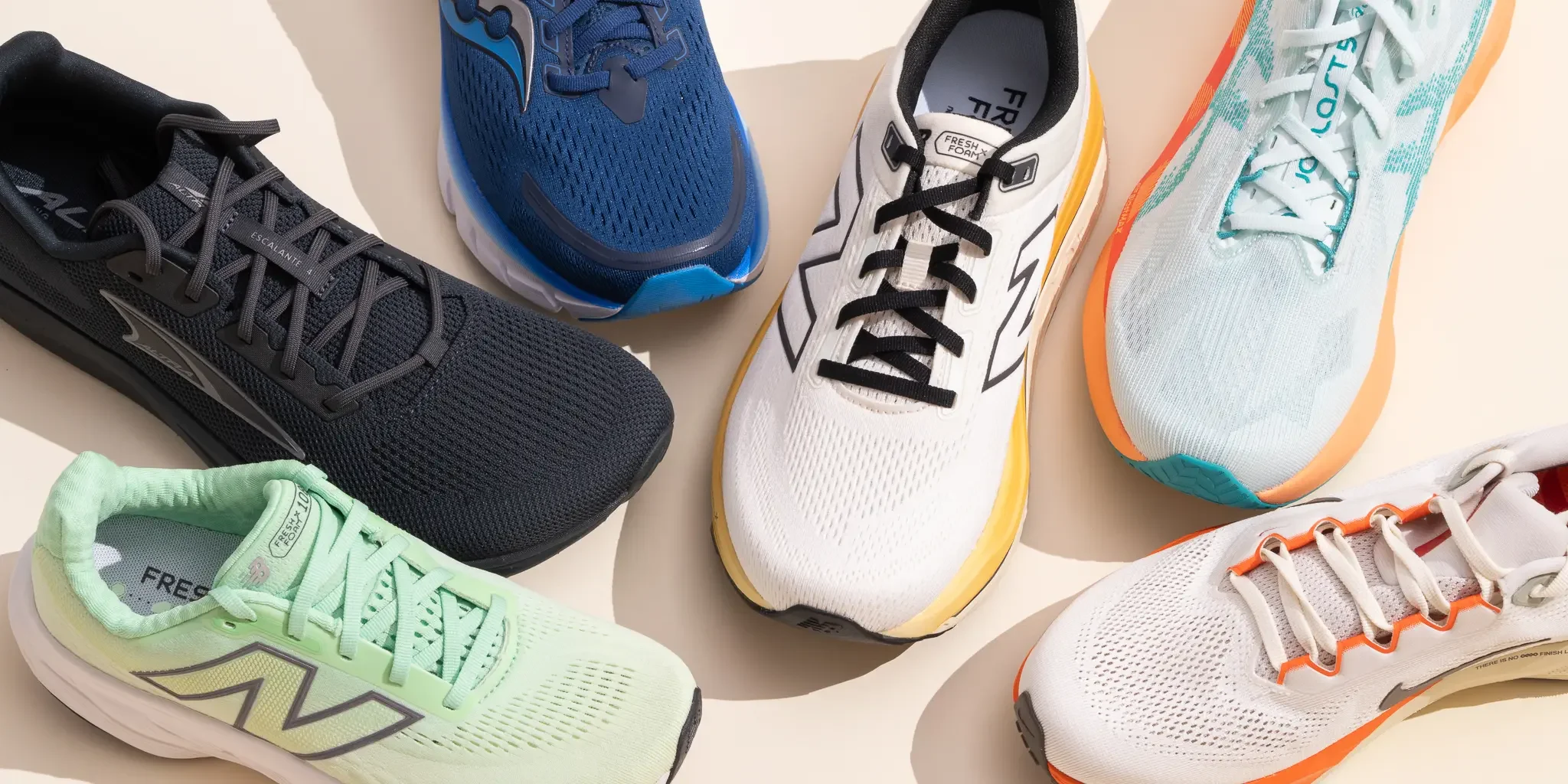
Why it matters: Your shoes are the only piece of equipment between your body and the ground on every single stride. Getting footwear wrong doesn't guarantee injury — the research is clear that no single shoe type prevents injuries across all runners — but wearing worn-out shoes, making sudden footwear changes, or choosing shoes that don't fit correctly are consistently identified as contributing factors in running injuries. This page tells you what actually matters and cuts through the marketing noise.
An honest note on shoe research:
A 2022 Cochrane systematic review of 11,240 runners found no consistent reduction in lower-limb injuries when comparing different types of running shoes. The old model of prescribing shoes based on foot type, motion control for flat feet, neutral for high arches, has limited scientific support. What the research does support is this: shoes that feel comfortable to you are more likely to allow natural, efficient movement patterns. Comfort is a more reliable guide than foot type categories assigned by a salesperson.
Signs your shoes need replacing:
The midsole feels flat or compressed rather than springy underfoot
The heel counter is visibly crushed or no longer holds its shape
The outsole tread is worn smooth in specific areas, particularly under the heel or forefoot
You've noticed more soreness than usual in your feet, calves, or knees without a training explanation
You've run more than 300–500 miles in them
Most shoes lose up to 40% of their shock-absorbing capacity around 300–500 miles. Most runners wait far too long to replace them. If you don't track mileage, a practical rule is to replace training shoes every 6–9 months if you're running 30–40 miles per week.
How to pick a running shoe:
Comfort is the most important factor. Not arch type, not gait analysis, not what your teammate wears. When trying on shoes, they should feel immediately comfortable — no break-in period, no pressure points, no areas of tightness. If a shoe doesn't feel right in the store it won't feel right at mile 8.
Toe box space matters. There should be roughly a thumb's width of space between your longest toe and the end of the shoe. Running shoes that are too short are one of the most common causes of black toenails, blisters, and toenail loss during races.
Heel hold without pressure. The heel should feel secure without the shoe collar pressing into the back of the ankle. A collar that digs in is a direct cause of retrocalcaneal bursitis and Achilles irritation.
Shop in the afternoon. Feet swell throughout the day, and a shoe that fits perfectly in the morning may feel tight after an hour of running. Shopping later in the day gives you a more accurate fit.
Go to a specialty running store for your first pair. Not because their gait analysis is scientifically perfect, but because the staff can watch you move, compare several options, and let you test run in the store. The experience is more useful than ordering online blind.
Minimalist vs maximalist shoes:
Minimalist shoes (low drop, thin sole, minimal cushioning) increase the load on the Achilles tendon and calf significantly. Transitioning too quickly from standard to minimalist shoes is a well-documented cause of Achilles tendinopathy, calf strains, and metatarsal stress fractures. If you want to try minimalist shoes, transition over months, not weeks.
Maximalist shoes (very thick, highly cushioned sole) redistribute load away from the foot and ankle, which may benefit runners with plantar fasciitis or metatarsalgia but can reduce sensory feedback from the ground. The evidence for maximalist shoes specifically preventing injury is limited, but they are appropriate for runners who find them comfortable.
Carbon fiber plated shoes are racing shoes. They improve running economy and are appropriate for race day, but using them for all training significantly increases the cost per mile and the mechanical stress on the Achilles and calf. Reserve them for races and tune-up workouts.
Spikes — for sprinters and cross country:
Track spikes for sprinting allow maximum force transfer and are appropriate for race day and fast workouts on the track. Using spikes for all training is unnecessary and increases Achilles stress significantly. Cross country spikes should be chosen based on course conditions — longer spikes for wet or muddy courses, shorter for firm ground. Never race in spikes for the first time on race day — wear them for at least a few workouts beforehand.
Socks:
Socks matter more than most runners give them credit for. Moisture-wicking synthetic or merino wool socks reduce friction and blister risk significantly compared to cotton. Seam placement matters — socks with flat or no seams over the toes prevent the localized friction that causes blisters in long races. Double-layer socks like those made by Wrightsock or Balega are specifically designed for blister prevention and are worth trying if blisters are a recurring problem.
Other gear worth knowing about:
Compression sleeves and socks have limited evidence for preventing injury but are useful for managing symptoms during recovery from calf strains, Achilles tendinopathy, and shin splints. Wearing them during runs doesn't replace rehabilitation but can make training more comfortable during a flare-up.
Foam rollers — useful for reducing muscle tightness and improving how you feel before and after runs, though the evidence for long-term injury prevention is moderate. A standard density foam roller for larger muscles and a massage ball for the foot and calf are the two most practical tools.
GPS watches are useful for monitoring mileage, pace, and training load. One of the most evidence-supported uses is tracking weekly mileage to avoid increasing by more than 10% per week, which is one of the most reliable predictors of overuse injury development.
Heart rate monitors are more useful for distance runners than sprinters. Training at the correct intensity for easy runs specifically — most runners go too hard on easy days — is one of the most impactful training adjustments a distance runner can make for long-term health and performance.
Key Takeaways:
Replace shoes every 300–500 miles or 6–9 months at moderate weekly mileage
Comfort is the most reliable guide for shoe selection — not foot type categories
Never make sudden footwear changes — transition new shoes gradually over 2–3 weeks
Sprinters should reserve spikes for races and fast workouts, not all training
Moisture-wicking socks prevent most blisters — cotton socks don't
