Sleep & Recovery
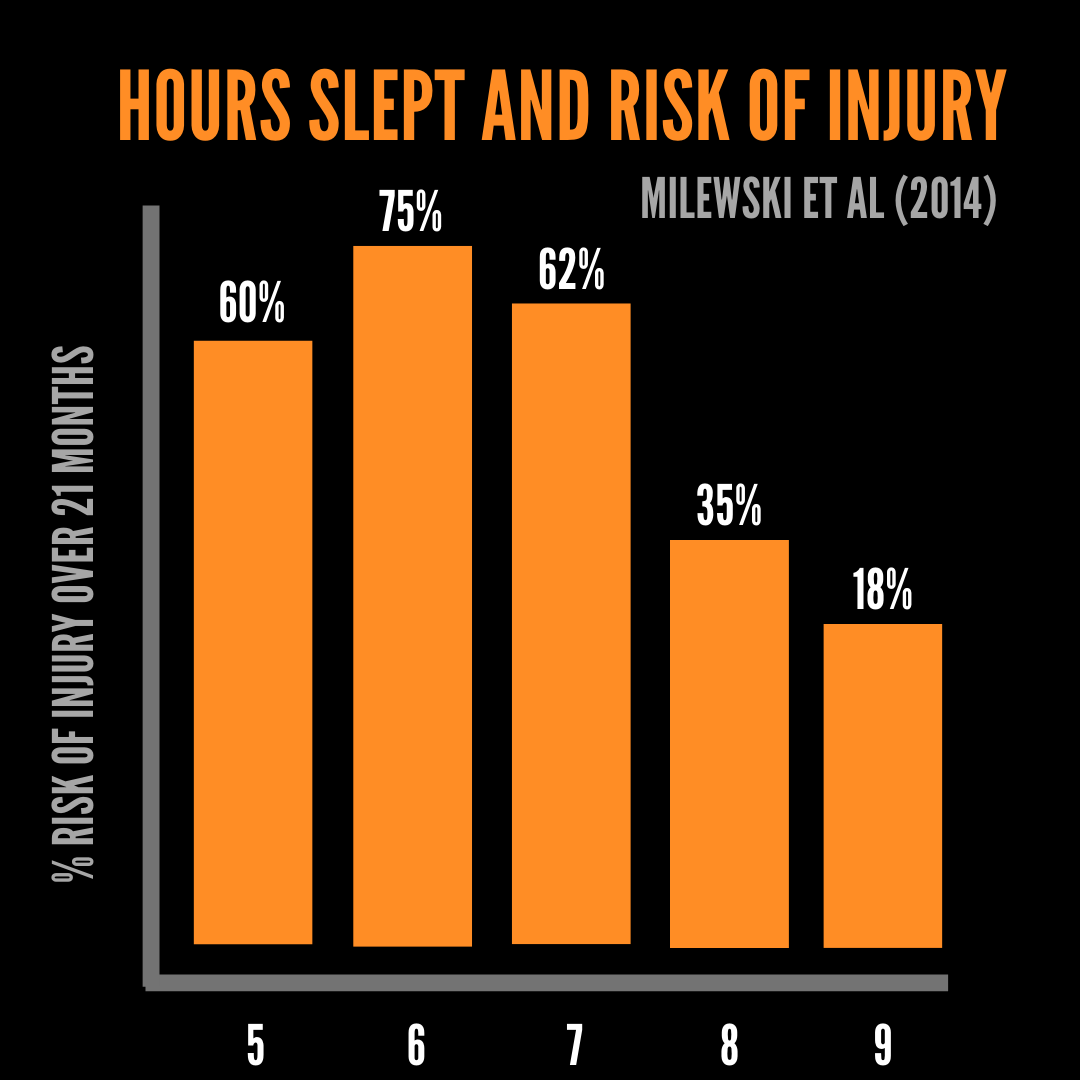
Why it matters for runners: Teen runners sleeping under 8 hours per night have 1.7x higher injury risk. Sleep is when your muscles repair, your bones recover from stress, and your nervous system consolidates the movement patterns you drilled in practice. No supplement, ice bath, or stretching routine comes close to what a full night of sleep does for your body.
How much you actually need:
Teen athletes (13–18): 8–10 hours per night
Adult athletes: 7–9 hours per night
During heavy training weeks or competition season: add 30–60 minutes on top of your normal target
One hour decrease in sleep duration has been associated with a 43% increase in injury risk in athletes
Signs you're not getting enough:
Legs feeling heavy or dead even on easy days
Getting sick more frequently than usual
Performance declining despite consistent training
Mood dropping, motivation disappearing
Injuries cropping up more than they should
How to Improve Your Sleep:
Consistent sleep and wake times: Going to bed and waking at the same time every day, including weekends, is the single most impactful habit for sleep quality. It stabilizes your circadian rhythm and makes falling asleep and waking up significantly easier over time. Two hours of sleeping in on Saturday shifts your internal clock later and makes Sunday night and Monday morning noticeably harder.
Phone out of the bedroom: More than a third of teens report checking their phones in the middle of the night, directly breaking sleep cycles. Blue light from screens suppresses melatonin production, the hormone that signals your body to sleep. Putting your phone across the room or in another room entirely before bed removes the temptation and is one of the highest-return changes you can make.
Room environment: A cool, dark, and quiet room makes a measurable difference in sleep quality. Your body temperature naturally drops during sleep — a room that's too warm fights this process. Blackout curtains, a fan for white noise, and keeping the room around 65–68°F are all evidence-supported adjustments.
No screens 30–60 minutes before bed: Beyond just the phone, any screen, television, laptop, or tablet emits blue light that delays melatonin release. Replacing screen time before bed with reading, light stretching, or just lying quietly makes falling asleep meaningfully faster.
Avoid caffeine after 2pm: Caffeine has a half-life of around 5–6 hours, meaning a coffee or energy drink at 4pm still has half its caffeine in your system at 9–10pm. Most runners don't realize caffeine is disrupting their sleep even when they feel like they fall asleep fine — the issue is sleep quality and depth, not just falling asleep.
Wind-down routine: Your body needs a signal that sleep is coming. A consistent 15–20 minute routine before bed — whether that's a shower, light stretching, or just dimming the lights — trains your nervous system to start transitioning toward sleep rather than staying in the alert state that school, practice, and homework keep you in all day.
Napping correctly: A 20–30 minute nap between 1:30pm and 3pm partially restores alertness and reaction time lost from a short night. Going longer risks waking from deep sleep feeling worse, and napping too late in the day pushes your bedtime later. Used correctly, a short nap is the best tool available to a student athlete dealing with chronic short school nights.
Managing pre-sleep stress: Anxiety about sleep itself, worrying that you won't fall asleep or that you slept badly last night, is one of the most common causes of insomnia in teen athletes. If you can't sleep after about 20 minutes in bed, get up, do something calm in dim light, and come back when you're actually tired rather than lying there anxious. Cognitive behavioral therapy for insomnia (CBT-I) has the strongest evidence of any treatment for ongoing sleep problems and is worth looking into if poor sleep is a persistent issue.
Wearables and sleep tracking: Sleep tracking devices can be useful for identifying patterns but can also backfire — regularly seeing reminders of how badly you slept creates stress that worsens the problem. Use tracking data as useful information, not something to obsess over.
The student athlete problem:
Your school schedule is working against you biologically. During puberty your circadian rhythm shifts later — meaning your brain doesn't want to fall asleep until around 11pm, but school forces you up at 6am. Naturally, the fix can’t just be "go to bed earlier,” here's what actually helps:
Protect the morning: Research shows losing end-of-night sleep from waking early hurts performance more than going to bed slightly late. Don't sacrifice morning sleep for things that can be done later.
Nap strategically: A 20–30 minute nap between 1:30–3pm partially restores alertness and reaction time lost from a short night. Keep it under 30 minutes or you'll wake up groggy.
Front-load your homework: Get as much done during school free periods and lunch as possible so your evenings have more room for sleep.
Early morning practice: If your coach schedules early morning workouts, understand these are a guaranteed sleep debt builder over a season. Communicate with your coach if it's becoming a chronic problem.
Pre-race night:
You will almost certainly sleep badly the night before a race. That's normal and it doesn't matter as much as you think. One bad night has minimal impact on performance when the preceding week of sleep has been good. Stop stressing about it — the week before a race matters far more than the night before.
Key Takeaways:
8–10 hours is the target, not 7
Your biology makes early mornings genuinely harder as a teen
A 20–30 minute nap is your best tool when school nights are short
Phone in bed is the single easiest fix with the highest return
One bad pre-race night doesn't ruin a race
