Ingrown Toenails
Severity: Mild in early stages; Moderate to Severe if infected or requiring surgery
Typical recovery time: Mild cases managed at home can improve within 1–2 weeks
Can I keep running? Often yes for mild cases with proper footwear and protection
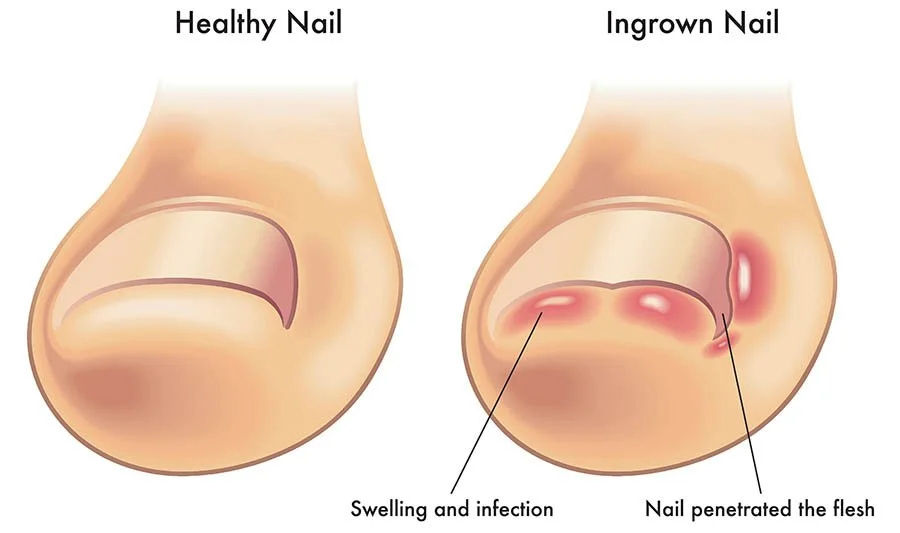
What's Actually Happening: An ingrown toenail, medically called onychocryptosis, occurs when the edge of the nail plate grows into or curls down into the surrounding skin rather than growing parallel to the toe. The big toe is most commonly affected. For runners, the repetitive pressure and trauma of running significantly increases the risk. The two biggest contributors for runners specifically are shoes with a toe box that's too narrow or too short, and incorrect nail trimming technique. The condition progresses in stages: early on it's painful and tender, then swelling and redness develop, and if left untreated the nail breaks through the skin and infection becomes a real risk.
How You Know It's This (Symptoms):
Sharp pain along one or both edges of a toenail, particularly on the big toe
Tenderness, redness, and swelling of the skin around the nail edge
Pain that increases when pressure is applied directly to the nail or surrounding skin, and when putting weight through the toes
A warm, throbbing sensation that persists even at rest in infected cases
What To Do Right Now:
Soak the affected foot in warm soapy water or a saltwater solution for 15–20 minutes, two to three times daily, this softens the skin and nail, reduces swelling, and relieves pain
After soaking, gently try to lift the ingrown nail edge away from the skin using a clean cotton ball or dental floss tucked underneath, this gives the nail a path to grow outward rather than into the skin
Do not attempt to cut out the ingrown portion yourself if the nail is significantly embedded or infected
Switch to running shoes with a wider, roomier toe box
When to See a Professional:
Any signs of infection, pus, spreading redness, warmth, or a fever
A nail that's significantly embedded in the skin and can't be managed at home
Recurring ingrown toenails in the same location despite addressing footwear and trimming technique
Surgical treatment has a very high success rate — partial nail avulsion with chemical matrixectomy using phenol has shown a 94% success rate in one prospective study
How to Treat It:
Warm water soaks: The most important early home treatment. Soaking softens the nail and surrounding tissue, reduces inflammation, and makes it easier to gently redirect the nail away from the skin. Use warm soapy water or add a tablespoon of salt per litre of water.
Cotton wick or dental floss technique: After soaking when the skin is soft, carefully tuck a small piece of cotton or waxed dental floss under the ingrown nail edge to lift it slightly away from the skin. Change the packing daily. This guides the nail to grow outward rather than inward.
Footwear: Wide toe box running shoes that give the toes enough room to spread naturally are essential. Shoes that are too short — less than a thumb's width between the longest toe and the end of the shoe — are a direct cause of ingrown toenails in runners. Also ensure socks aren't too tight across the toes.
Antibiotic ointment: Apply a thin layer of over-the-counter antibiotic ointment to the ingrown area after soaking to reduce infection risk and keep the tissue from drying out and hardening around the nail.
Toe protectors and silicone guards: Gel toe caps or silicone nail guards cushion the affected toe during running and reduce the direct pressure and friction that worsens the condition.
Surgical treatment: For persistent, recurring, or infected cases, partial nail avulsion — removing the ingrown portion of the nail under local anesthetic — is the standard procedure and highly effective. When combined with phenol application to prevent regrowth of the nail edge, research shows a 94% success rate and only a 2% recurrence rate. Most runners can return to light activity within days and full training within 1-month post-procedure.
The Recovery Plan:
Days 1–7: Warm water soaks twice to three times daily, cotton wick technique after each soak, antibiotic ointment, and wide toe box footwear. Mild cases often show meaningful improvement within a week with consistent home care.
Week 1–2: Continue soaking and nail guidance. If running, use a silicone toe protector and ensure shoes have adequate toe box space. Monitor closely for any signs of infection.
Beyond 2 weeks: If symptoms haven't improved or are worsening despite consistent home treatment, see a podiatrist. Surgical partial nail avulsion is a straightforward outpatient procedure with a high success rate and short recovery.
